DIY garage door repair can save homeowners time, money, and unnecessary stress when common problems appear. A malfunctioning garage door isn’t just inconvenient — it can affect home garage security, daily routines, and the overall reliability of your automatic garage door system. The good news is that many common garage door problems have simple solutions you can safely handle yourself.
In this expert guide, you’ll learn how to fix garage door yourself using proven methods, understand garage door troubleshooting steps, and recognize when a situation requires professional garage door repair. Whether your garage door won’t open, the garage door opener motor runs but the door won’t move, or your door is making grinding noise, these practical steps will help restore smooth operation.
Understanding How Your Garage Door System Works
Before starting any garage door repair, it’s important to understand the basic garage door mechanism. A typical residential garage system includes the torsion spring system or extension spring system, garage door tracks, rollers, safety sensors, and the garage door opener motor connected to a remote control opener.
These garage door components work together to maintain proper door balance and door alignment. Over time, garage door wear and tear can cause performance issues such as a stuck garage door, uneven movement, or slow operation. Recognizing these garage door failure symptoms early helps prevent costly emergency garage door repair later.
Garage Door Troubleshooting: Start Here First
When facing garage door operation issues, begin with a structured garage door troubleshooting guide. Many homeowners assume they need a local garage door technician immediately, but basic inspection often reveals simple fixes.
Start by checking the power source, remote batteries, and safety sensors. Look for visible damage to garage door hardware, cables, and rollers. Listen carefully for unusual sounds that indicate garage door binding or misalignment.
Two quick checks can solve many issues:
- Verify the safety sensors are clean and aligned. Misaligned safety sensors are one of the most common causes of a garage door not closing or reversing unexpectedly.
- Inspect the remote control opener and wall switch. If the garage door remote is not working, replacing batteries or reprogramming the opener often restores function.
If the garage door opener repair seems necessary after these checks, continue with the targeted fixes below.
Common DIY Garage Door Repair Fixes
Fixing a Garage Door That Won’t Open
A garage door not opening is among the most frequent homeowner complaints. If your garage door opener motor runs but the door won’t open, the issue usually involves the spring system, disconnected trolley, or stripped gears.
First, disengage the opener using the emergency release and try lifting the door manually. If the door feels extremely heavy, a broken torsion spring or extension spring is likely the cause. In this situation, avoid DIY garage door spring replacement unless you have proper tools and experience, because spring tension can be dangerous.
If the door moves smoothly by hand, inspect the opener carriage and drive gear. Many cases of garage door opener repair involve worn plastic gears inside the motor housing.
How to Fix Garage Door Off Track
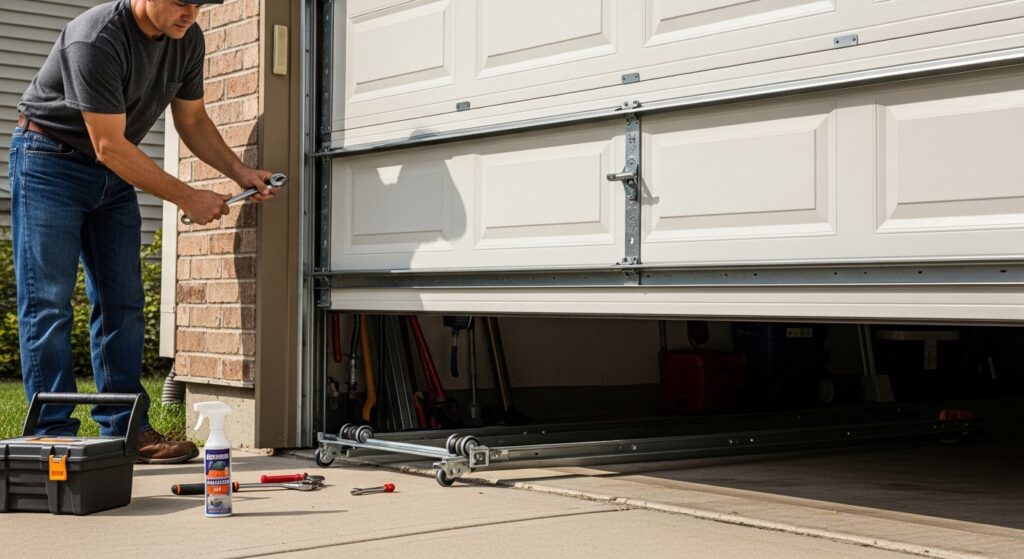
Garage door off track repair is sometimes manageable for homeowners if the damage is minor. Misaligned garage door tracks or obstructed rollers often cause the door to jerk when opening or appear uneven.
Begin by disconnecting the opener and manually positioning the door. Check for bent track sections, loose brackets, or debris blocking the rollers. Minor garage door track alignment can often be corrected by gently loosening the mounting bolts, tapping the track back into position, and retightening.
However, if the door has severely jumped the track or panels are twisted, professional garage door repair is strongly recommended to prevent structural damage.
Garage Door Cable Repair and Replacement
Garage door cable replacement is another common need when doors become crooked or one side lifts unevenly. Cables support the spring system and help maintain proper door balance.
Inspect both sides for fraying, rust, or slack cables. If you notice significant wear or a snapped cable, avoid operating the door. While some homeowners attempt DIY garage door repair for cables, the tension involved means this task often falls into the category of residential garage door repair best handled by experts.
DIY Garage Door Opener Repair
When dealing with garage door opener repair, start with the simplest possibilities. If the garage door opens halfway or the garage door closes then reopens, the issue often involves limit settings or safety sensor interference.
Check the opener’s force and travel limits according to the manufacturer’s instructions. Clean the safety sensors and ensure proper alignment. For garage door motor repair, listen for humming without movement — this may indicate worn internal gears.
DIY garage door opener repair is usually safe for electrical adjustments and sensor fixes, but internal motor replacement should be left to a garage door service professional.
Garage Door Maintenance Checklist for Long-Term Reliability
Preventative garage care is the best way to avoid emergency garage door repair. A consistent garage door maintenance checklist improves garage door lifespan and keeps the overhead door system operating smoothly.
| Maintenance Task | Recommended Frequency | Benefit |
| Garage door lubrication tips (rollers, hinges, tracks) | Every 6 months | Reduces noise and wear |
| Garage door balance test | Every 6 months | Prevents opener strain |
| Safety sensors cleaning | Quarterly | Improves home garage security |
| Garage door inspection checklist | Annually | Detects early damage |
| Hardware tightening and tune up | Annually | Maintains door alignment |
Regular garage door preventive maintenance dramatically reduces garage door performance issues and helps homeowners avoid costly repairs.
Garage Door Repair Cost: DIY vs Professional
Understanding garage door repair pricing helps you decide when to fix garage door without professional help and when to call a garage door company Lewisville homeowners trust.
Minor basic garage door repairs such as sensor cleaning or lubrication cost very little when done yourself. However, tasks involving broken torsion spring replacement, cable repair, or major garage door panel repair typically require specialized tools and training.
The average cost garage door repair in Lewisville, TX varies widely depending on the issue. Homeowners often request a garage door repair estimate before proceeding. While cheap garage door repair options exist, quality workmanship should always be the priority to ensure long-term garage door reliability.
When DIY Garage Door Repair Is NOT Safe
While many homeowner garage repairs are manageable, some situations demand immediate professional garage door service. High-tension components can cause serious injury if handled incorrectly.
Call a local garage door technician or emergency garage door repair provider if you notice:
- A broken torsion spring or severely damaged extension spring
- Significant garage door cable repair needs or snapped cables
These repairs require specialized tools and should be handled by the best garage door repair company available in your area.
Local SEO Focus: Garage Door Repair in Lewisville, TX
Homeowners searching for garage door repair Lewisville TX often face sudden issues that require quick action. While DIY garage door repair works for minor problems, some situations require same day garage door repair from a trusted overhead door repair Lewisville provider.
If your garage door is stuck closed during severe weather or your residential garage door repair becomes complex, contacting an affordable garage door repair service near you ensures safe and reliable results. Many local providers offer emergency garage door repair and full system inspections to restore proper functionality.
Expert Garage Door Safety Tips
Safety should always come first during any DIY garage door repair project. Because the garage door system contains heavy moving parts, careful handling is essential.
Always disconnect power before working on the automatic garage door system. Keep hands clear of garage door tracks and rollers during testing. Use proper tools and avoid improvising with makeshift equipment.
Consistent garage door preventive maintenance combined with safe repair practices protects both your home and your family.
Final Thoughts
DIY garage door repair is an excellent way for homeowners to handle minor garage door performance issues, reduce service costs, and maintain their residential garage system. With proper garage door troubleshooting, routine maintenance, and attention to safety, many common problems can be resolved quickly.
However, knowing your limits is just as important as knowing the fix. When repairs involve high-tension components or complex mechanical failures, partnering with a trusted garage door repair near me provider in Lewisville, TX ensures long-term reliability and peace of mind.
By combining preventative garage care with smart decision-making, you can keep your overhead garage door repair needs minimal and your system operating smoothly for years to come.
FAQs About DIY Garage Door Repair
How do I fix my garage door yourself?
To fix garage door yourself, start with basic garage door troubleshooting: check power supply, remote batteries, and safety sensors. Inspect garage door tracks, rollers, and hardware for obstructions or looseness. Perform lubrication and a garage door balance test. If the issue involves springs or cables, contact a professional garage door repair service for safety.
Is it safe to repair a garage door yourself?
Many basic garage door repairs such as lubrication, sensor cleaning, and minor track alignment are safe for homeowners. However, DIY garage door spring replacement, major garage door cable repair, and torsion spring system work can be dangerous and usually require a trained technician.
Why does my garage door opener run but the door won’t move?
If the garage door opener motor runs but the door won’t open, the most common causes include a broken torsion spring, stripped opener gear, or disconnected trolley. Start with garage door troubleshooting steps to isolate the issue before attempting repairs.
How much does garage door repair cost in Lewisville, TX?
Garage door repair cost varies depending on the problem. Minor fixes may cost under $100, while spring or cable replacements can range much higher. Getting a detailed garage door repair estimate from a garage door company Lewisville residents trust is the best way to know the exact price.
When should I call a professional garage door repair company?
Contact a professional garage door repair provider when dealing with broken springs, snapped cables, severe garage door off track repair, or recurring garage door operation issues. These situations often require specialized tools and expertise to restore safe function.