
Modern garage door safety hinges on the precision of the photo-eye sensors, which act as the primary defense against entrapment and property damage. When these infrared units fail, your safety logic circuit triggers an immediate reversal to prevent the door from closing on obstructions. Understanding the technical nuances of garage door sensor repair ensures your system remains compliant with federal safety standards while extending the life of your motor.
A non-closing garage door is often the result of a failed safety reversal test, indicating that the invisible beam is either broken or mismanaged. Neglecting these signals can lead to significant garage door motor strain, as the opener repeatedly struggles against perceived “ghost” obstructions. By mastering garage door opener troubleshooting, homeowners can resolve common faults like interrupted signals without compromising the structural integrity of their entry system.
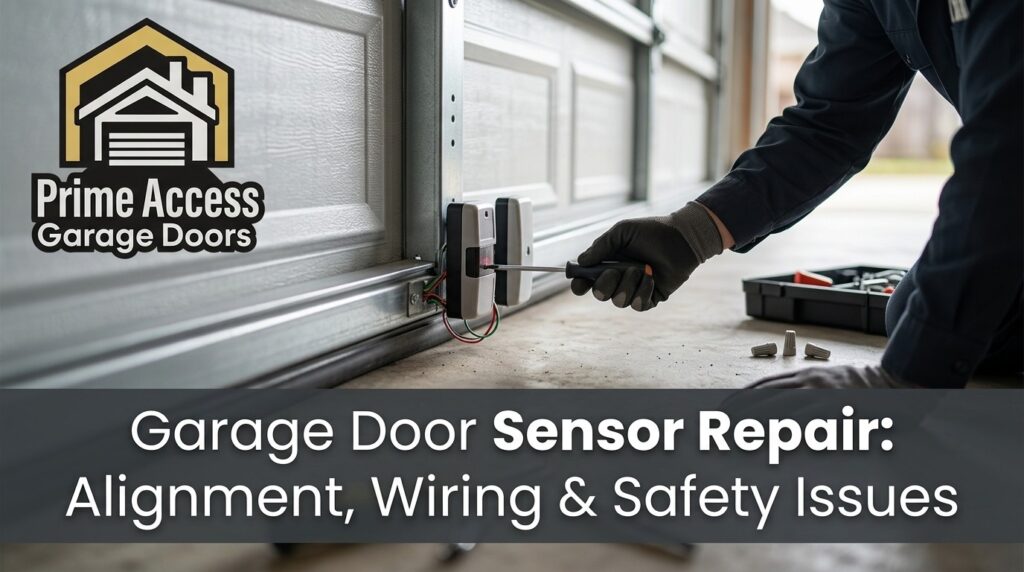
How Garage Door Sensors Work
The operational core of your garage door system relies on a continuous infrared safety beam transmitted between two units mounted on the vertical track placement. These sensors, positioned 4 to 6 inches above the floor, create a digital perimeter that must remain unbroken for the door to complete its downward cycle. If any object enters this path, the obstruction detection system sends an instant command to the opener to initiate the garage door reversal system. To verify status at a glance, manufacturers include LED indicator lights—usually amber and green—that remain solid when the communication link is healthy. Failure to maintain this alignment results in a system lockout, forcing the user to manually override the motor, which is a temporary and risky solution.
5 Common Garage Door Sensor Problems
Identifying the root cause of a sensor failure requires a systematic approach to garage door opener troubleshooting and a clear understanding of environmental factors. Most issues stem from physical shifts in the mounting brackets or degradation of the low-voltage wiring that powers the infrared units. When the system detects a discrepancy, it often results in a blinking sensor light fix requirement or the door stopping halfway during operation. These problems range from simple environmental interference like sunlight glare to internal electronic failures that demand a full replacement sensor kit. Addressing these five common faults promptly ensures your home remains secure and your pinch points safety protocols remain active.
1. Misaligned Sensors
Garage door track alignment is often compromised by vibration or accidental impact, shifting the sensors out of their direct line of sight. When the infrared safety beam fails to hit the receiving lens accurately, the system assumes there is a permanent obstruction. You must adjust the mounting brackets and tighten the wing nut adjustment to ensure both LED indicator lights return to a solid, non-blinking state. A precise alignment is the only way to satisfy the safety logic circuit and allow for a smooth, automated closing cycle.
2. Dirty or Blocked Sensors
The build-up of dust, spider webs, or debris on the lens is a frequent cause of an interrupted signal that prevents the door from closing. Proper sensor lens maintenance involves using a soft, lint-free cloth and avoiding harsh chemicals that could cloud the delicate photo-eye surface. If you are cleaning the garage door eye, ensure the surrounding area is clear of foliage or storage items that might sway into the beam’s path. Even a microscopic layer of grime can diffuse the infrared light enough to trigger a false obstruction detection event.
3. Damaged Wiring
Wire connectivity issues are a major technical hurdle, often caused by pests chewing through lines or wires becoming frayed due to door vibration. You must inspect the low-voltage wiring from the sensors all the way back to the motor head for any signs of exposure or corrosion. In many cases, weatherproofing sensor wires with proper conduits can prevent future failures caused by moisture or extreme temperature shifts. If the wiring is compromised beyond a simple splice, a professional technician inspection is recommended to ensure the circuit remains stable.
4. Sunlight Interference
High-intensity sunlight interference/glare can temporarily “blind” the receiving sensor, tricking the system into thinking the beam is blocked. This usually happens during specific hours of the day when the sun is at a low angle, directly hitting the photo-eye sensors. To fix this, you can install small sun shields or hoods over the sensors to provide shade without blocking the infrared safety beam itself. This is a common environmental fault that doesn’t require a replacement sensor kit, but rather a simple physical adjustment.
5. Faulty Sensors
Internal electronic failure is inevitable as units age, especially after a decade of exposure to garage humidity and dust. If you have confirmed power but one of the LED indicator lights remains dark, you likely have a dead unit that requires a replacement sensor kit. Modern kits must be compatible with your specific opener brand to ensure the safety logic circuit communicates correctly during the safety reversal test. Once installed, professional calibration ensures that all common garage door faults are mitigated and the system is fully synchronized.
Why Garage Door Sensor Repair Matters
Investing time in garage door sensor repair is not just about convenience; it is a fundamental requirement for maintaining a home that complies with UL 325 safety standards. When these sensors malfunction, the safety logic circuit forces the opener into a defensive mode, often leading to garage door motor strain and unnecessary wear on the internal gears. Beyond protecting your equipment, functioning sensors are the only reliable defense against pinch points safety hazards that can cause catastrophic injury to children or pets.
A ignored sensor issue can also compromise your home’s security, as a non-closing garage door leaves your property vulnerable to intruders. Ensuring a solid interrupted signal resolution provides the peace of mind that your automated system will perform exactly when needed without failing a safety reversal test.
The Technical Importance of Photo-Eye Alignment
Proper garage door track alignment ensures that the infrared path remains stable even during the heavy vibrations of the door’s operation. If the mounting brackets are loose, the resulting “ghost” obstructions will trigger the garage door reversal system at the most inconvenient times. Frequent recalibration of these components prevents the blinking sensor light fix cycle from becoming a daily frustration for the homeowner.
Impact on Opener Longevity
A system that constantly fights against faulty obstruction detection signals will eventually suffer from premature motor burnout. By addressing common garage door faults early, you reduce the electrical load on the opener’s motherboard and capacitor. This proactive maintenance ensures that the low-voltage wiring and motor work in harmony rather than in conflict.
Federal Safety Compliance
Since 1993, federal law has mandated that all residential openers include a secondary entrapment protection system like photo-eye sensors. Failing to maintain these sensors can lead to liability issues and failed home inspections during property sales. Keeping the safety logic circuit active is a legal and ethical responsibility for every modern homeowner.
How to Repair a Garage Door Sensor Wire
Repairing low-voltage wiring requires a methodical approach to ensure the electrical current remains consistent from the sensor to the power head. You should start by disconnecting the opener from its power source to avoid shorting the safety logic circuit while handling exposed copper. Use a wire stripper to remove damaged sections caused by pests or door friction, then twist the matching colored wires together and secure them with waterproof wire nuts.
For long-term durability, focus on weatherproofing sensor wires by tucking them into the door’s track or using specialized clips to prevent them from snagging on moving parts. Finally, restore power and check the LED indicator lights to confirm that the wire connectivity issues have been fully resolved.
How to Align Garage Door Sensors LiftMaster
To align sensors on a LiftMaster system, you must first locate the LED indicator lights, where a solid green light typically indicates the receiving sensor is powered, while a solid amber light signifies the sending unit is active. Loosen the wing nut adjustment on the receiving sensor’s bracket and slowly pivot the unit until the green light stops flickering and glows steadily, indicating a clear interrupted signal path.
Once the infrared safety beam is centered, tighten the mounting brackets firmly to ensure that future door vibrations do not cause a non-closing garage door event. It is critical to finish this process by performing a safety reversal test with an object to verify that the obstruction detection is communicating correctly with the motor. Precision in this step is the only way to satisfy the safety logic circuit and ensure the door completes its cycle without a blinking sensor light fix being required.
The Role of Garage Door Safety Sensors
Garage door safety sensors, specifically known as photo-eye sensors, serve as the primary electronic “tripwire” for your entire automated entry system. Their fundamental purpose is to maintain a continuous infrared safety beam that creates an invisible perimeter just 4 to 6 inches above the garage floor. Whenever a child, pet, or vehicle breaks this beam, the safety logic circuit instantly communicates with the opener to terminate the downward cycle and initiate the garage door reversal system.
This rapid obstruction detection occurs in milliseconds, providing a critical fail-safe against entrapment or significant property damage. Without these sensors operating at peak performance, a heavy garage door poses a severe pinch point safety risk, violating modern residential safety standards.
Entrapment Prevention and Safety Logic
To comply with federal UL 325 standards, every residential opener must utilize a safety logic circuit that prioritizes human life over motor operation. This circuit ensures that if the infrared safety beam is compromised, the door will only move upward, effectively eliminating the risk of accidental crushing. This logic is hardwired into the system, meaning any interrupted signal or hardware failure will default the door to an open position for maximum protection.
Maintaining System Equilibrium and Motor Health
Beyond their life-saving capabilities, safety sensors play a vital role in preventing unnecessary garage door motor strain. When sensors are properly calibrated on the vertical track placement, the opener avoids “ghost” reversals that force the internal gears to work harder than necessary. By ensuring a stable and clear signal path, homeowners can prevent premature wear on the motor’s capacitor and drive belt, maintaining long-term system efficiency.
Maintenance Tips for the Longevity of Your Garage Door Sensors
To ensure your sensors last the full 15-year life expectancy, you must implement a routine of sensor lens maintenance and structural checks. Environmental factors like sunlight interference/glare and moisture are the leading causes of internal circuit failure, so shielding the units is vital. Regularly check the mounting brackets for rust or bending, as even a millimeter of shift can trigger a non-closing garage door event. Integrating these checks into your seasonal home maintenance prevents the need for a premature replacement sensor kit and keeps the motor running efficiently.
- Routine Lens Cleaning: Use a microfiber cloth to perform cleaning the garage door eye monthly, removing salt, dust, and cobwebs that diffuse the beam.
- Bracket Stability Check: Ensure the wing nut adjustment is tight, and the vertical track placement hasn’t shifted due to loose bolts or track impact.
- Wiring Inspection: Periodically scan the low-voltage wiring for bite marks from pests or fraying caused by the door’s movement against the wall.
- Sunlight Shielding: If you experience midday reversals, install a sunlight interference/glare hood to prevent the infrared receiver from being blinded by UV rays.
- System Testing: Conduct a monthly safety reversal test using a 2×4 piece of wood to verify the garage door reversal system is sensitive enough.
- Indicator Monitoring: Keep an eye on the LED indicator lights; any flickering is an early warning sign of wire connectivity issues or pending alignment failure.
Conclusion
Prioritizing garage door sensor repair in TX is the most effective way to ensure the long-term reliability and safety of your automated entry system. By maintaining clear photo-eye sensors and secure low-voltage wiring, you prevent unnecessary garage door motor strain and avoid costly mechanical failures. Ultimately, a well-calibrated safety logic circuit provides the essential protection needed to keep your home secure and your family safe from entrapment risks.
A proactive approach to garage door opener troubleshooting transforms a temperamental door into a seamless, high-performance asset. Consistent sensor lens maintenance and regular safety reversal tests are small investments that yield significant dividends in system longevity and federal compliance. By addressing common garage door faults immediately, you uphold the highest standards of pinch points safety while ensuring your garage remains a functional part of your home.
Frequently Asked Questions
Can I bypass garage door sensors if they are broken? Bypassing sensors by holding the wall button is a temporary manual override, but it is highly discouraged as it disables the safety logic circuit. For permanent safety and compliance with UL 325 standards, you must perform a proper garage door sensor repair or install a replacement sensor kit.
What is the correct height for mounting photo-eye sensors? Sensors must be installed on the vertical track placement no higher than 6 inches above the garage floor to detect low-profile obstructions. Positioning them higher can create a blind spot, causing the obstruction detection system to miss small objects or pets, leading to potential accidents.
Why does my garage door close partway and then reverse if the sensors look clean? This issue often indicates an intermittent interrupted signal caused by loose mounting brackets or vibration-induced wire connectivity issues. Even if the lenses are clean, the infrared safety beam may be flickering due to a loose wing nut adjustment that shifts during the door’s movement.
How do I know if my sensor problem is actually a logic board failure? If your LED indicator lights are completely dark despite confirmed power and healthy low-voltage wiring, the issue may reside in the opener’s motherboard. A professional technician inspection is required to determine if the safety logic circuit on the main board has shorted or if the sensors simply need replacement.
Does cold weather affect garage door sensor performance? Extreme cold can cause metal mounting brackets to contract or lead to frost buildup, which diffuses the infrared safety beam. Regular sensor lens maintenance during winter, including wiping away condensation or ice, prevents a non-closing garage door during the coldest months.
