
The operational safety of your overhead system is anchored by the garage door hinge, a critical pivot point that facilitates the seamless transition of heavy panels along the tracks. When a single hinge loses its structural rigidity, it creates a cascading failure that forces the opener to work twice as hard, leading to premature gear stripping. Consistent monitoring of every garage door hinge is the most effective way to detect metal fatigue before a simple hardware fix turns into a total door collapse.
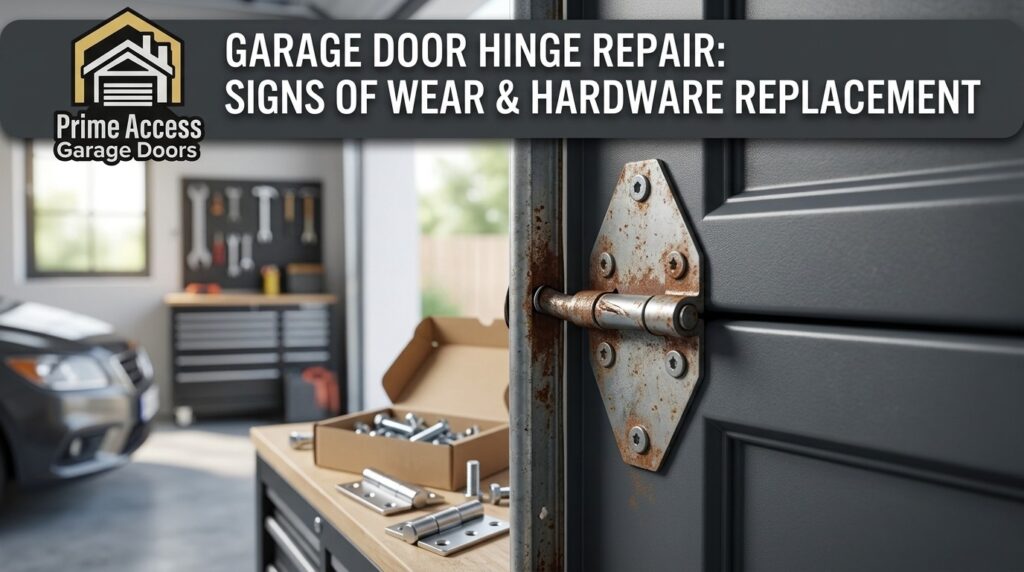
A well-maintained garage door hinge acts as the backbone of your door’s geometry, ensuring that each section maintains a weather-tight seal and perfect vertical alignment. As these steel components age, they become susceptible to “egging” and stress fractures that compromise the entire lifting mechanism’s balance. By investing in high-gauge garage door hinge replacements in TX at the first sign of friction, you protect your home’s security and ensure the long-term reliability of your automated entrance.
What Are Garage Door Hinges?
Garage door hinges are the critical steel connectors that join horizontal panels together, acting as the “knuckles” of the system that allow it to navigate the curved track. These components are engineered to withstand thousands of pounds of tension while ensuring that each section of the door moves in a synchronized, fluid motion. Without high-quality hinges, the door would remain a rigid slab, making it impossible to retract into the ceiling space or maintain a weather-tight seal against the floor.
A well-functioning hinge must be both rigid enough to hold weight and flexible enough to rotate under pressure. If these parts are neglected, the entire door’s balance is compromised, leading to premature wear on the springs and tracks.
The Pivot Point Mechanism
The primary role of the hinge is to provide a stable axis for the door panels to rotate as they transition from a vertical to a horizontal position. This movement must be perfectly calibrated to avoid binding, which can put immense strain on the garage door opener’s gears and rail. A well-maintained pivot point ensures that the weight of the door is distributed evenly across the entire lifting assembly without friction. Regular lubrication of these points is the only way to prevent the metal from grinding down over the years of daily use.
Structural Reinforcement
Beyond movement, hinges serve as the primary bracing system that holds the door panels in a flat, cohesive plane when the door is closed. They prevent the panels from bowing inward or outward during high winds or under the pressure of their own significant weight. This structural reinforcement is what allows modern sectional doors to be both lightweight enough for manual use and strong enough for home security. If a hinge loses its stiffness, the panels can sag, creating a safety hazard for anyone standing near the door.
Roller Integration Points
Many hinges, specifically those located on the outer edges of the door, feature a specialized sleeve designed to hold the roller stems in place. This dual-purpose design ensures the door remains locked within the tracks while simultaneously allowing it to flex during the opening cycle. If the hinge sleeve becomes distorted or loose, the roller can pop out of the track, creating a hazardous situation for your property. Ensuring these sleeves are tight and properly aligned is essential for a quiet and safe garage door operation.
Common Signs of Worn Garage Door Hinges
Identifying wear before it turns into a total mechanical failure is the hallmark of a responsible and observant homeowner. You should look for physical deformities such as “egging,” where the circular holes for the pivot pins have stretched into ovals due to years of friction. Furthermore, any visible light passing through the seams between panels when the door is closed often indicates that a hinge has bent or lost its tensioning capability.
Metal-on-metal grinding leaves behind fine shavings, which is a clear indicator that the structural integrity of the part is failing. If you ignore these early warnings, the cost of repair will escalate from a simple part replacement to a full door realignment.
Auditory Warning Signals
If your garage door has started emitting high-pitched screeching or heavy grinding sounds, your hinges are likely crying out for immediate attention. Metal-on-metal contact occurs when the factory lubrication has completely dissipated or when the internal pivot pin has begun to shave off layers of the hinge leaf. Ignoring these sounds will eventually lead to the metal snapping under the intense pressure of the door’s heavy torsion springs. A quiet door is a safe door, so any change in the acoustic profile of your garage should be investigated.
Visible Metal Fatigue
Check the surface of the hinges for fine lines that look like spiderwebs, as these are actually stress fractures indicating that the steel is nearing its breaking point. You might also notice a buildup of black, greasy soot around the pivot points, which is a mixture of old oil and pulverized metal shavings. Once these fractures appear, the hinge’s structural integrity is compromised, and it can no longer safely support the weight of the panel. Replacing a cracked hinge immediately is the only way to prevent a sudden and dangerous panel collapse.
Panel Misalignment and Gaps
When hinges wear out unevenly, the door panels will begin to sit crookedly, creating uneven gaps that allow pests and drafts to enter your garage. You can test this by watching the door move; if one side seems to “hitch” or jump while the other moves smoothly, the hinges are failing. A sagging panel is more than a cosmetic issue; it creates a lopsided load that can burn out your opener’s motor. Proper alignment depends on every hinge being perfectly straight and tightened to the door’s frame.
Types of Garage Door Hinges and Their Functions
Garage door hinges are not universal components; they are precision-engineered tools numbered specifically to dictate their placement and the required distance from the track. The numbering system, typically ranging from #1 to #10, ensures that the door maintains a proper seal against the doorjamb while allowing it to lean back as it moves upward. Using the wrong hinge in a specific position will cause the door to bind, leading to track damage or a burnt-out opener motor. High-quality hinges are usually stamped from 14-gauge or 11-gauge galvanized steel to provide the necessary rigidity for heavy sectional doors. When replacing these parts, you must match the existing number exactly to maintain the door’s original geometry and operational safety.
Center Hinges
Center hinges are the most common variety found on a garage door, typically located between the panels in the middle sections. These hinges are flat and do not hold a roller, as their sole purpose is to allow the panels to fold as they navigate the curved portion of the track. Because they deal with constant folding tension, they are often the first to develop “egging” or stretched pivot holes. Ensuring these are tightly bolted prevents the panels from sagging in the middle and maintains a clean, professional appearance.
End Hinges
End hinges serve a dual purpose by connecting the panels at the edges and providing a sleeve for the roller stems to slide through. The higher the number stamped on the hinge, the further the roller sleeve sticks out, which creates the necessary taper for the door to shut tightly against the wall. For example, a #3 hinge will always be placed higher on the door than a #2 hinge to accommodate the track’s gradual slope. If these are installed out of sequence, the door will either have massive gaps or will scrape against the header during movement.
Heavy-Duty Commercial Hinges
Commercial-grade hinges are significantly thicker than standard residential hardware, often utilizing 11-gauge steel to support the weight of industrial-sized doors. These hinges frequently feature a double-leaf design or reinforced ribs to prevent the metal from buckling under high-frequency use. They are essential for environments where the door opens and closes dozens of times per day, providing the durability needed to avoid constant maintenance. Switching to heavy-duty hinges on a residential door can be a smart upgrade for homeowners looking for maximum longevity and quietness.
Specialty Flush-Mount Hinges
Flush-mount or low-profile hinges are designed for specific door types where space between the door and the track is extremely limited. These are common in older homes with low-headroom configurations where every inch of clearance is vital for the door to clear the ceiling. While they function similarly to standard hinges, their compact design requires precise installation to ensure the rollers don’t bind within the track radius. Using these specialty parts allows for smooth operation in tight architectural spaces that would otherwise be impossible to automate.
Parts of a Garage Door Hinge
Understanding the anatomy of a garage door hinge is essential for diagnosing mechanical issues before they lead to a total system failure. Each hinge is composed of heavy-duty galvanized steel plates, known as leaves, which are specifically gauged to handle the immense weight of sectional panels. These leaves are joined by a central pivot pin that acts as the axis of rotation, allowing the door to flex as it moves from the vertical tracks to the horizontal overhead rails.
On the outer edges of the door, these hinges also feature specialized cylindrical housings called roller sleeves, which secure the stems of the rollers in place. If any single part of this assembly bends or corrodes, the entire door’s geometry is thrown out of alignment, causing unnecessary strain on the opener.
- Hinge Leaves: These are the flat metal plates that are bolted directly into the door panels to provide a secure mounting surface. They must be made of high-quality steel to resist bending under the constant tension of the door’s weight.
- Pivot Pin: This central rod connects the two leaves together and serves as the primary point of rotation for the door sections. It requires regular lubrication to prevent metal-on-metal friction from grinding down the hinge’s structural integrity.
- Roller Sleeve: Located on the side hinges, this hollow tube holds the roller stem, allowing the door to stay locked within the track. A distorted sleeve can cause the roller to pop out, leading to a dangerous “door-off-track” scenario.
- Number Stamp: Every hinge is stamped with a number that indicates its specific taper and placement height on the door. Using a hinge with the wrong number will cause the door to bind against the header or leave massive gaps.
- Galvanized Coating: This protective zinc layer is applied to the steel to prevent rust and corrosion in humid garage environments. Once this coating wears off, oxidation can quickly seize the pivot pin and snap the hinge leaf.
- Reinforcement Ribs: Many high-quality hinges feature raised ridges along the leaves to provide extra stiffness against bending. These ribs are crucial for heavy wooden or double-layer steel doors that exert high pressure on the hardware.
Fully Black Garage Door Hinges
For homeowners looking to blend high-end aesthetics with industrial durability, fully black garage door hinges offer a sophisticated upgrade over standard galvanized hardware. These hinges are typically finished with a powder-coated or electrophoretic deposition process that provides superior resistance to chips, scratches, and environmental corrosion.
Beyond their sleek appearance, the dark finish hides the inevitable buildup of dark grease and road grime that often makes traditional silver hinges look unkempt. Architects and designers frequently specify black hardware to complement modern farmhouse or contemporary industrial home styles, creating a cohesive look across the home’s exterior. When installing black hinges, it is vital to use matching black-capped fasteners to maintain the seamless, premium aesthetic.
Why Replacing or Maintaining Garage Door Hinges Matters?
Regularly maintaining or replacing your garage door hinge is a fundamental safety requirement that prevents the heavy panels from becoming structural hazards. Because these hinges hold thousands of pounds of tension, a single fracture can cause a panel to buckle or collapse entirely during operation. Proactive replacement ensures that the door’s weight remains evenly distributed, protecting the expensive torsion springs from uneven wear and snapping.
Furthermore, smooth-pivoting hinges reduce the mechanical resistance the opener must overcome, significantly extending the lifespan of the motor and internal gears. Ignoring worn hardware doesn’t just lead to noise; it invites a total system failure that can trap your vehicle or compromise your home’s security.
Comprehensive Impact Analysis: Maintenance vs. Neglect
| Technical Aspect | Impact of Regular Maintenance | Consequences of Neglected Hinges | Long-Term Financial Effect |
| System Alignment | Ensures panels remain perfectly vertical and flush against the weather stripping. | Leads to “panel sag,” creating gaps that allow pests, water, and drafts to enter. | Lower energy bills and zero structural panel damage. |
| Opener Longevity | The motor operates at its intended RPM with minimal amperage draw. | Increased friction forces the motor to overheat and strips the drive gear. | Saves $400 – $800 on premature opener replacement. |
| Operational Noise | Silent, fluid movement that eliminates metal-on-metal screeching. | Produces loud grinding and popping sounds that vibrate through the home. | Maintains property value and peace of mind. |
| Safety Integrity | Pivot pins remain secure, preventing panels from slipping out of the tracks. | “Egging” of hinge holes can cause the door to fall mid-cycle. | Prevents high-cost liability and emergency medical bills. |
| Spring Tension | Tension is distributed equally across all hardware points. | Lopsided weight causes one spring to work harder, leading to early snapping. | Extends spring life by 3-5 years on average. |
| Hardware Health | Galvanized coating stays intact, preventing oxidation and seizing. | Rust eats through the steel, causing the hinge leaf to snap under pressure. | Avoids the cost of a full “overhaul” kit and labor. |
| Track Protection | Rollers stay perpendicular to the track, preventing rail widening. | Bent hinges push rollers at odd angles, warping the vertical tracks. | Prevents the need for a total track and rail realignment. |
Conclusion
The performance of your overhead door is inextricably linked to the structural health of every garage door hinge installed across its panels. Neglecting these small but vital components invites a chain reaction of mechanical failures that can compromise your home’s security and lead to massive repair bills. By prioritizing high-gauge steel replacements and adhering to a strict lubrication schedule, you ensure that your door operates with the whisper-quiet precision that defines a well-maintained home.
Investing in professional-grade hardware is more than a simple maintenance task; it is an insurance policy against the sudden and hazardous collapse of your garage system. A robust garage door hinge provides the necessary pivot flexibility and structural bracing required to handle the daily stress of high-tension torsion cycles. When you choose to address hinge wear proactively, you are effectively safeguarding your opener’s motor and preserving the architectural integrity of the entire door assembly for years to come.
Frequently Asked Questions
Can I use WD-40 to lubricate my garage door hinges? While WD-40 is a great cleaner, you should avoid it for long-term lubrication because it evaporates quickly and attracts dust that creates a grinding paste. Instead, use a high-quality lithium-based or silicone spray specifically designed to penetrate deep into the hinge pivot points without leaving a sticky residue.
How do I know what gauge of steel my replacement hinges should be? Residential hinges are typically 14-gauge or 18-gauge, with the lower number (14-gauge) indicating a thicker and more durable steel construction. For heavy insulated or wooden doors, upgrading to 11-gauge commercial hinges is often recommended to prevent metal fatigue and bending.
Is it safe to replace a garage door hinge by myself? You can safely replace center hinges while the door is closed, but you must exercise extreme caution with the bottom fixtures or end hinges connected to cables. Because these specific parts are under intense spring tension, loosening them without proper knowledge can lead to severe physical injury or a falling door.
Why are the hinges on the edge of my door numbered differently? The numbers on end hinges, such as #1, #2, or #3, signify a specific offset that pushes the door further away from the wall as it rises. This graduated numbering system ensures a tight weather seal when the door is closed while preventing the panels from scraping the header during the opening cycle.
How often should I tighten the bolts on my hinges? You should perform a hardware “tightness test” at least once every six months as the vibration from daily operation naturally loosens lag screws. Ensuring these fasteners are snug prevents the hinge leaves from wobbling, which is the primary cause of elongated or “egged” mounting holes in the door panels.
