
Homeowners often view a garage door inspection as an optional upsell rather than a necessary safety protocol. While you technically have the right to refuse any service on your property, doing so during a repair visit is a strategic error. A refusal forces a garage door technician to work on a specific symptom without addressing the underlying mechanical ecosystem that caused the failure. This narrow focus often leads to repeated breakdowns and compromised home security shortly after the initial fix.
Opting out of a comprehensive evaluation ignores the fact that garage doors are heavy, pressurized systems under immense spring tension. Professional garage door inspection protocols are designed to identify safety risks that are invisible to the untrained eye, such as hairline fractures in hardware. By denying an inspection, you are essentially asking a professional to ignore potential hazards that could lead to catastrophic door failure. It is a decision that trades a small amount of time for a significant increase in long-term liability and repair costs.
What Is a Garage Door Inspection?
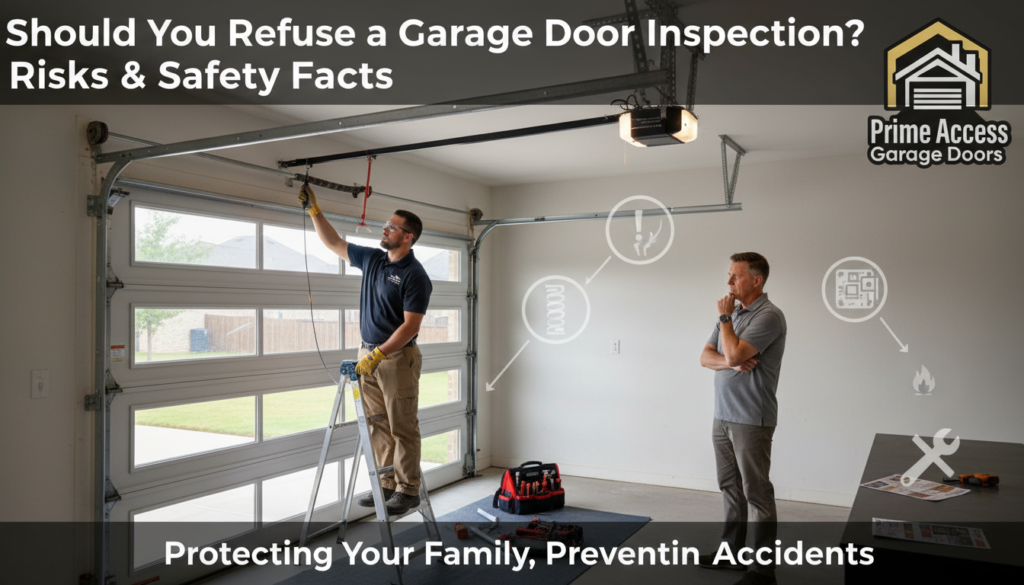
A professional garage door inspection is a systematic evaluation of the entire door assembly to ensure every component operates within manufacturer specifications. It involves a high-level full safety check where a technician examines the lifting cables for fraying and verifies that the spring tension is balanced correctly. The process also includes testing the safety sensors and the safety reverse function to prevent accidental entrapment or injury. Beyond safety, the technician inspects metal components like rollers and tracks for signs of corrosion and rust that hinder smooth door movement. This diagnostic routine concludes with the application of silicone-based lubricant to moving parts, ensuring the system remains quiet and efficient.
Key Benefits of Regular Garage Door Inspections
Regularly scheduled maintenance is the most effective way to ensure the longevity and reliability of your home’s most prominent entry point. By conducting a professional garage door inspection, you allow an expert to verify the door balance and alignment, which prevents unnecessary strain on the automatic opener service. These visits focus on identifying safety risks before they escalate into dangerous mechanical failures that could damage your property or cause injury. Consistent care also helps to reduce garage door noise and ensures smooth door movement by addressing friction in the metal components. Ultimately, a routine check-up provides peace of mind that your remote controls and safety features will function exactly when you need them.
Enhanced Operational Safety
A full safety check is the only way to ensure the door won’t become a physical hazard to your family or pets. Technicians specifically test the safety reverse function and the alignment of safety sensors to ensure the door stops for any obstructions. Neglecting these checks means you are operating a heavy overhead machine with zero confirmed fail-safes in place during daily use. Regular oversight identifies weakened lifting cables before they snap and cause the door to crash down unexpectedly.
Extended Hardware Lifespan
Consistent inspections prevent premature wear on expensive metal components like rollers and tracks, saving you significant replacement costs. By keeping the door balance and alignment precise, you reduce the strain placed on the automatic opener service and the internal motor. A technician applying silicone-based lubricant during an inspection prevents the friction that leads to warped tracks or stripped gears over time. This proactive care ensures you get the maximum possible years out of your original equipment investment.
Noise Reduction and Performance
Regular maintenance is the most effective way to drastically reduce garage door noise and achieve a whisper-quiet operation. An inspector identifies loose hardware and worn rollers that cause the jarring vibrations and grinding sounds common in neglected doors. Ensuring smooth door movement not only makes the system quieter but also indicates that the motor is working at peak mechanical efficiency. Addressing these minor issues early prevents the “shaking” that eventually loosens the entire door structure and remote controls.
Prevention of Costly Emergencies
Identifying small issues like minor spring tension imbalances or surface corrosion and rust prevents total system failure at inconvenient times. Most emergency repair calls are the result of long-term neglect that could have been solved during a routine garage door technician visit. By catching these problems early, you avoid the premium labor rates associated with after-hours or “same-day” emergency service requests. A small investment in an inspection today acts as a financial shield against a multi-thousand-dollar total door replacement tomorrow.
What to Expect During a Garage Door Inspection
During a professional garage door inspection in TX, a qualified garage door technician performs a comprehensive evaluation of the entire system’s mechanical and electronic health. The process begins with a full safety check to ensure that the door balance and alignment are perfect, preventing excessive strain on the motor. You should expect the professional to examine all metal components, specifically looking for signs of corrosion and rust on the hinges and brackets. They will also verify the integrity of the lifting cables and ensure the spring tension is adjusted to manufacturer specifications. This thorough diagnostic approach is designed to identify safety risks and ensure smooth door movement before small issues escalate into expensive failures.
Component Lubrication and Tuning
The technician will apply a high-quality silicone-based lubricant to all moving parts, including the rollers and tracks, to minimize friction. This essential step helps to reduce garage door noise and prevents the grinding that leads to premature hardware failure. Beyond oiling, the expert will tighten any loose bolts or screws that have vibrated loose during normal operation. This tuning process ensures the door remains stable and secure within its tracks during every cycle.
Safety Feature Testing
Testing the safety reverse function is a critical phase of the inspection where the technician uses an object to ensure the door retracts upon contact. They will also check the alignment and cleanliness of the safety sensors located at the base of the door tracks. If these sensors are misaligned, the door may fail to close or, worse, fail to stop for an obstruction. This testing confirms that your automatic opener service is operating with all its intended protective features active.
Hardware and Cable Assessment
A deep dive into the lifting cables and springs is necessary to prevent catastrophic snaps that could drop the door without warning. The technician looks for fraying in the steel cables and checks for “gaps” in the torsion springs that indicate metal fatigue. They also inspect the rollers for flat spots or cracked ball bearings that might hinder performance. Replacing these small parts during an inspection is significantly cheaper than a full emergency repair later.
Signs Your Garage Door Needs an Inspection
If your door begins to exhibit irregular behavior, it is a clear signal that the system requires a professional garage door inspection immediately. One of the most common indicators is a sudden increase in garage door noise, such as screeching, banging, or grinding during the opening cycle. You may also notice that the door appears crooked or hangs unevenly, suggesting that the spring tension or door balance and alignment is off. If the door hesitates or moves slower than usual, the automatic opener service might be struggling against unlubricated metal components. Ignoring these red flags increases the likelihood of a total breakdown and compromises the safety of your home.
Inconsistent Movement
If the door shakes, stutters, or moves in a “jerky” fashion, there is likely a blockage or a bend in the rollers and tracks. This inconsistency forces the opener to work harder, which can lead to a burnt-out motor if not addressed by a garage door technician. A professional can quickly realign the system to restore smooth door movement and prevent further internal damage. Do not ignore a door that fails to open or close on the first attempt from your remote controls.
Visible Wear and Tear
Take a moment to visually inspect the metal components for any obvious signs of corrosion and rust or physical deformation. Frayed lifting cables or rusted springs are “ticking time bombs” that require immediate professional intervention to avoid injury. If you see cables hanging loosely or springs that look elongated, the system’s structural integrity is already compromised. Visual wear is often the final warning sign before a complete mechanical failure occurs.
Safety Sensor Failures
When your garage door starts reversing for no apparent reason or refuses to close unless you hold the wall button, the safety sensors are likely failing. While sometimes just a matter of cleaning the lenses, it often points to a wiring issue or a deeper fault in the automatic opener service. Since these sensors are the primary defense against accidents, a failure here constitutes a high-priority safety risk. An inspection will determine if the sensors need a simple recalibration or a total replacement.
DIY Maintenance Tips Between Garage Door Inspections
While a professional garage door technician should handle complex repairs, consistent DIY upkeep ensures the system remains reliable between annual visits. You should regularly clean the tracks with a damp cloth to remove debris and dust that can cause the rollers to slip or bind. It is also wise to perform a monthly visual check of the lifting cables and springs to ensure no obvious fraying or rusting has begun. Keeping the area around the safety sensors clear of spiderwebs or storage boxes prevents unnecessary interruptions in the door’s operation. By dedicating a few minutes each month to these basic tasks, you preserve smooth door movement and extend the life of your hardware.
- Clean the Tracks: Use a stiff brush or a damp cloth to remove grease buildup and dirt from the inside of the tracks. This ensures the rollers move freely without hitting obstructions that cause garage door noise.
- Apply Proper Lubricant: Every few months, apply a silicone-based lubricant to the hinges, rollers, and springs. Avoid using thick grease or WD-40, as these can attract more dirt and eventually gum up the metal components.
- Check Hardware Tightness: Use a socket wrench to gently tighten the bolts on the tracks and the brackets holding the opener. The constant vibration of the door can loosen these fasteners over time, leading to misalignment.
- Test the Balance: Disconnect the opener and lift the door halfway by hand; it should stay in place without sliding up or down. If it falls or snaps open, the spring tension is incorrect and requires a professional adjustment.
- Clear the Sensors: Wipe the lenses of the safety sensors with a soft, dry cloth to ensure the infrared beam is never blocked. Ensure that no garden tools or trash cans are leaning near the tracks to trigger a false reversal.
- Inspect Weatherstripping: Check the rubber seal at the bottom of the door for cracks or brittle sections that allow drafts and moisture inside. Replacing a worn seal protects the bottom of the door from corrosion and rust caused by rain or snow.
- Monitor Remote Performance: Replace the batteries in your remote controls once a year to ensure a strong signal to the automatic opener service. This prevents the frustration of a door that only responds intermittently when you are trying to enter.
Conclusion
Prioritizing a professional garage door inspection is a fundamental aspect of responsible homeownership that safeguards both your finances and your family. While it may be tempting to skip these evaluations, the risks of mechanical failure and safety hazards far outweigh the minor cost of a routine check. A well-maintained system operates efficiently, providing reliable access to your home while minimizing the noise and vibration associated with worn components. Ultimately, consistent professional oversight ensures that your garage door remains a convenient asset rather than a dangerous liability.
Investing in long-term maintenance today prevents the stress and high costs of emergency repairs in the future. By following a structured schedule of professional inspections and supplementary DIY care, you can maximize the lifespan of every hardware component. This proactive strategy allows you to catch minor issues like spring fatigue or sensor misalignment before they escalate into total system shutdowns. Secure your home’s primary entry point by treating every inspection as a necessary investment in safety and operational excellence.
Frequently Asked Questions
Does a garage door inspection affect my manufacturer’s warranty?
Yes, many manufacturers require documented professional maintenance to keep your specific parts warranty valid over time. Failing to provide proof of regular inspections could result in a denied claim if a major component fails prematurely.
Can extreme weather conditions impact how often I need an inspection?
Homeowners in regions with severe temperature fluctuations or high humidity should consider semi-annual inspections to combat rapid metal expansion and contraction. These environmental factors accelerate the buildup of corrosion and rust, necessitating more frequent professional oversight.
Will a professional inspection help lower my home insurance premiums?
Some insurance providers offer discounts or lower deductibles for homeowners who can prove their overhead doors meet modern safety and security standards. A certified technician’s report serves as official documentation that your entry points are properly maintained against forced entry or accidents.
Is it necessary to be present at home during the entire inspection process?
While not strictly required, being present allows you to observe the technician’s findings and understand the specific mechanical needs of your system. It also provides an opportunity to ask questions about the unique sounds or movements your door exhibits during daily use.
How do I know if my garage door technician is properly certified?
You should always verify that your technician is affiliated with reputable industry organizations like the International Door Association (IDA). Checking for proper licensing and liability insurance ensures that the person inspecting your high-pressure spring system is qualified and covered.
