
The garage door opener circuit board acts as the central processor for your entire automated entry system, regulating everything from motor torque to safety protocols. When this critical component fails, the lack of communication between the handheld transmitter and the motor housing creates a total operational standstill. Professional diagnostics require an understanding of how electrical currents interact with sensitive microprocessors to execute rolling-code security and obstruction detection. If you ignore the subtle signs of board degradation, you risk a permanent hardware failure that could have been prevented with a timely technical intervention.
Technical authority in the garage door industry is built on the ability to distinguish between a simple mechanical blockage and a terminal logic board failure. A compromised control board often presents symptoms that mimic sensor misalignments, leading many homeowners to waste money on the wrong replacement parts. By focusing on the integrated circuits and diagnostic LED codes, you can pinpoint exactly when the motherboard has reached its end of life. This guide provides the high-level technical insight necessary to identify, troubleshoot, and resolve complex circuit board issues before they compromise your home’s security.
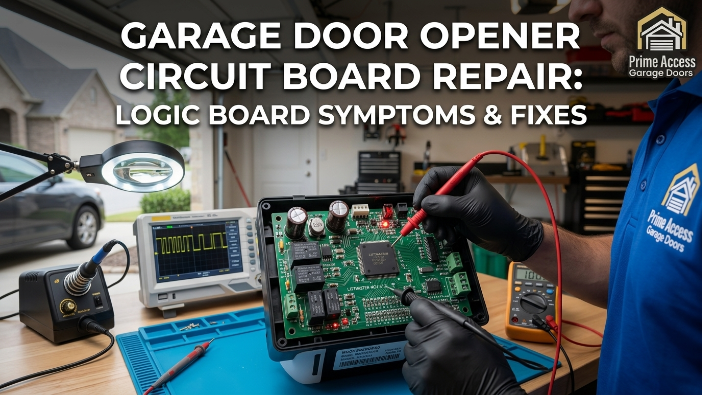
How do I know if my garage door circuit board is bad?
Determining whether a garage door control board is defective requires systematically eliminating external power and signal variables. You likely have a bad logic board if the motor housing emits a humming sound but fails to engage the drive chain or belt. A definitive sign of failure is when the “Learn” button or diagnostic LED refuses to light up even though the unit is receiving power.
Furthermore, if your rolling-code remotes lose their programming memory every few days, the board’s storage chip is likely corrupted. You should also inspect the physical surface of the board for any visible burn marks or swollen capacitors caused by sudden voltage spikes. Always verify that your surge protector is functioning correctly before assuming the internal circuitry has been permanently fried.
What is a Garage Door Opener circuit Board?
The circuit board is a sophisticated assembly of relays and microchips designed to manage the high-current demands of the opener’s motor. It serves as the primary interface for all wireless communications, safety sensor signals, and manual wall station commands. Beyond simple signal routing, the board actively regulates the voltage fluctuations that could otherwise lead to terminal motor burnout during heavy usage cycles.
It also houses the non-volatile memory chips responsible for retaining user settings and rolling-code encryption during unexpected power outages. By acting as a surge-sensitive firewall, the board protects the system’s delicate internal components from the destructive impact of external electrical spikes.
The Brain of the System
The logic board processes the encrypted signals sent by your remotes to ensure that only authorized users gain access to your home. It constantly calculates the required force needed to lift the door while monitoring for any changes in mechanical resistance.
Without this processing power, the motor would have no way to stop or reverse safely during an emergency. This component is the most delicate part of the opener and is highly sensitive to environmental factors.
Power Distribution and Regulation
This board converts standard household AC power into the low-voltage DC current needed to operate the sensors and logic circuits. It includes a transformer and several rectifiers that ensure a steady flow of electricity to the sensitive onboard microprocessors.
If these regulators fail, the board can become overloaded, leading to a complete system shutdown or erratic motor behavior. Proper grounding is essential to ensure that this distribution process remains stable over the years of constant use.
Integration of Safety Protocols
The circuit board is the termination point for the safety sensors alignment, ensuring the infrared beam is active before allowing movement. It processes the signal from the RPM sensor to detect if the door has encountered an obstruction in its path.
If the board detects an error in these safety circuits, it will trigger the lights to flash as a warning. Reliability in this area is non-negotiable for maintaining the safety standards of any modern garage door system.
Understanding the Role of a Garage Door Circuit Board
A garage door opener circuit board acts as the bridge between user commands and mechanical execution, ensuring every cycle is both smooth and secure. It filters out radio frequency interference to ensure that remote signal issues do not prevent you from entering your own garage. Beyond simple motion, the board manages advanced features like soft-start and soft-stop transitions to reduce wear on the motor and drive system.
When the board is healthy, it optimizes energy consumption and protects the motor housing from overheating during heavy periods of use. If this regulation is lost, the mechanical components of your door will suffer from premature fatigue and eventual failure.
Signal Processing and Encryption
Modern LiftMaster logic boards utilize high-level encryption to prevent hackers from capturing and replaying your remote’s signal. The onboard memory stores the unique “handshake” between your transmitter and the motor to maintain a secure connection.
This processing happens in milliseconds, allowing for an immediate response when you press the button on your visor. Without this encryption logic, your home’s largest entry point would be vulnerable to simple radio-jamming techniques.
Mechanical Force Management
The circuit board regulates the specific amount of electrical current sent to the motor to compensate for the door’s weight. By adjusting these force limits, the board prevents the motor from burning out if the garage door springs become unbalanced.
It also monitors the speed of the door to ensure it remains within the manufacturer’s specified safety parameters. Precise force management is what allows the door to stop instantly if a person or pet crosses the path.
Signs Your Garage Door Opener Circuit Board is Bad
The most common indicator of a bad logic board is “phantom operation,” where the door moves without any command being issued. This is typically caused by a short circuit on the board that mimics the signal from a wall station or remote. You may also notice that the diagnostic LED codes are flashing patterns that specifically indicate an internal hardware error.
If your Genie and Guardian circuit boards are failing, the overhead lights may stay on permanently or fail to activate at all. When these signs appear, the board’s ability to safely manage the opener has been compromised beyond simple repair.
- Intermittent Signal Response: The unit fails to respond to remotes even when standing directly under the motor housing.
- Total Power Failure: The motor shows no signs of life, and the diagnostic lights remain dark despite a live outlet.
- Unexplained Reversals: The door reverses back to the open position immediately after touching the floor without any obstruction.
- Burnt Components: A smell of ozone or visible scorch marks on the board indicate a terminal electrical short.
- Clicking Sounds: You hear the internal relays clicking inside the housing, but the motor fails to turn the drive.
- Lost Settings: The opener frequently loses its travel limits and force settings, requiring constant manual reprogramming to function.
Protecting Your Garage Door Circuit Board
Protecting the delicate microprocessors within your garage door control board is essential for avoiding premature system failure and costly repairs. The most effective line of defense is the installation of a dedicated surge protector designed specifically for the high-voltage demands of a motor housing. These boards are highly susceptible to voltage spikes caused by lightning strikes or grid fluctuations, which can fry the integrated logic circuits in milliseconds.
Additionally, ensuring that your garage is properly insulated helps prevent moisture buildup that can lead to terminal corrosion on the copper traces of the board. You should also perform regular balance tests on your door to ensure the board isn’t overcompensating with excessive force that strains the electrical relays. Consistent maintenance of the wiring harnesses prevents vibration-induced shorts that often mimic bad logic board symptoms.
Common Causes of Garage Door Circuit Board Failure
The primary catalyst for a LiftMaster logic board failure is often an external electrical event that exceeds the board’s voltage tolerance. Power surges, whether from the local utility provider or a direct lightning strike, are the leading cause of fried capacitors and burnt resistors. Beyond electrical spikes, simple age and heat cycles within the motor housing can cause the solder joints to crack over time, leading to intermittent signal loss.
Environmental factors like high humidity or pest infestations can also introduce conductive debris that shorts out the sensitive Genie and Guardian circuit boards. When the board is forced to operate under high-stress conditions due to an unbalanced door, the drive relays eventually weld shut or fail.
- Electrical Surges: Sudden spikes in the power grid can overwhelm the board’s internal rectifiers and cause permanent hardware damage. Using a high-quality surge protector is the only reliable way to mitigate this constant threat to your system’s intelligence.
- Worn Solder Joints: Years of vibration from the motor can cause the physical connections on the board to fracture and lose conductivity. This often results in erratic behavior where the door only responds to commands intermittently or during specific temperatures.
- Moisture and Corrosion: Humidity trapped inside the motor housing leads to oxidation on the circuit traces, which disrupts the flow of electricity. Professional garage door opener repair often involves cleaning these traces, though severe corrosion usually necessitates a full board replacement.
- Insects and Debris: Small insects are often attracted to the warmth of the logic board and can cause short circuits by bridging active components. Keeping the housing sealed and clean is a simple but overlooked aspect of protecting your garage door control board.
- Excessive Force Strain: If the door’s springs are weak, the board must send more current to the motor, which overheats the onboard relays. Over time, this thermal stress degrades the board’s ability to manage power distribution, leading to a total system shutdown.
How to Diagnose a Faulty Garage Door Circuit Board
Diagnosing a failing logic board requires a methodical approach to separate electrical faults from simple mechanical obstructions or remote signal issues. You should begin by checking the diagnostic LED codes located near the “Learn” button, as these flashes provide a specific error roadmap. If the LED remains dark despite a confirmed power source, the board’s transformer or primary logic chip has likely suffered a terminal failure.
Another reliable test involves disconnecting the wall station wires to see if the “phantom operation” or erratic behavior persists without external input. You must also verify that the safety sensors’ alignment is correct, as a healthy board will always signal a specific flash pattern when the beam is broken. If the motor hums but the relays do not click, the board is failing to send the necessary start signal to the motor capacitor. Finally, check for physical signs of damage, such as a burnt smell or discolored components, which serve as undeniable evidence of a bad logic board.
Garage door opener circuit board Replacement
Replacing a garage door opener circuit board, also known as the logic board, is a high-precision repair that serves as the “brain surgery” of residential automation. When the board fails due to power surges or component aging, the entire system loses its ability to process signals from remotes, sensors, and wall stations. A successful replacement requires a technician to disconnect power, ground themselves against static discharge, and carefully transfer complex wiring harnesses to the new hardware.
Because modern boards house sensitive Wi-Fi modules and encryption chips, even a minor misalignment during installation can result in a total loss of security synchronization. Once the new board is seated, the technician must execute a full “travel-learn” cycle to recalibrate the open and close limits, ensuring the motor doesn’t overdrive the rail.
| Technical Variable | Requirement / Specification | Complexity | Tools Required | Risk Factor if Ignored |
| Model Compatibility | Exact Part Number Match (e.g., 041-series) | High | Magnifying Glass | Incompatible pin-connectors |
| Antenna Frequency | 310MHz, 315MHz, or 390MHz (Security+ 2.0) | Medium | Frequency Scanner | Remotes will fail to pair |
| Voltage Input | 120V AC (Standard) / 24V DC (Battery Backup) | High | Multimeter | Board burnout on first power-up |
| Static Protection | Anti-static wrist strap or grounding | Medium | ESD Gear | Instant frying of the CMOS chip |
| Wire Harness Pin-Out | 4-pin to 10-pin configurations | Low | Needle-nose Pliers | Crossed wires/Short circuits |
| Learning Protocol | Purple, Orange, or Yellow Learn Buttons | Low | None (Manual) | Incorrect programming of accessories |
| Memory Capacity | Up to 12–40 Remote/Keypad Slots | Low | Software Toggle | Overwriting previous security codes |
| Solder Integrity | Cold solder joint inspection | Very High | Soldering Iron (Optional) | Intermittent power failure |
| Wi-Fi Module Sync | 2.4GHz Network compatibility | Medium | Smartphone App |
Conclusion
The garage door opener circuit board remains the most vital component for maintaining the security, safety, and operational efficiency of your automated garage system. Understanding the technical nuances of bad logic board symptoms allows you to intervene before a minor electrical flicker evolves into a total system failure. By prioritizing professional diagnostics and utilizing protective measures like surge protectors, you safeguard the sophisticated microprocessors that manage your home’s largest moving access point. Ultimately, a well-maintained control board ensures that your rolling-code encryption and safety protocols remain uncompromised for years of reliable service.
Investing time in accurate garage door opener repair techniques prevents the unnecessary expense of replacing an entire motor housing when only a single circuit is at fault. Whether you are dealing with LiftMaster logic boards or specialized Genie and Guardian circuit boards, technical precision during the diagnostic phase is non-negotiable for long-term success. As technology advances, these boards will continue to integrate more complex smart-home features, making their protection and proper calibration even more critical for modern homeowners. By following the rigorous testing and installation protocols outlined in this guide, you can ensure your garage door remains a seamless and secure part of your daily routine.
FAQS
How do I know if my garage door opener circuit board is bad?
A definitive indicator of failure is when the unit exhibits “phantom operation,” where the door moves without any command, or the diagnostic LED fails to light up despite receiving power. You should also suspect the board if your remotes frequently lose their programming or if you notice visible scorch marks and swollen capacitors on the circuitry.
What’s the average lifespan of a garage door opener?
A high-quality garage door opener typically lasts between 10 and 15 years, depending on the frequency of use and the consistency of mechanical maintenance. Once the motor housing reaches this age, the internal components become significantly more susceptible to gear wear and electronic fatigue.
Can you replace a circuit board in a garage door opener?
Yes, replacing the logic board is a standard repair procedure that is often more cost-effective than replacing the entire motorized unit. As long as the motor and rail assembly remain in good condition, swapping the board can restore full functionality and security to your system.
What is the lifespan of a circuit board?
The theoretical lifespan of a garage door control board is approximately 10 years, though this is frequently shortened by environmental factors like humidity and heat. Without a dedicated surge protector, a single electrical spike can terminate the board’s lifespan instantly, regardless of its age.
What does it cost to replace a circuit board?
The cost for a replacement logic board generally ranges from $80 to $200 for the part alone, depending on the brand and technical features like Wi-Fi connectivity. If you hire a professional for the installation, expect the total cost to sit between $200 and $350 including labor and calibration.
