
Distinguishing between a minor mechanical annoyance and a critical safety hazard is the first step in maintaining a functional home. A garage door that fails at midnight creates a different set of priorities than one that simply squeaks during your morning commute. Understanding the operational urgency required for your specific situation prevents unnecessary expenditures while ensuring your property remains secure against external threats. This guide breaks down the technical and financial variables to help you decide whether to dial an emergency technician or book a standard appointment.
Professional garage door systems rely on high-tension components that can become lethal projectiles if handled without the proper diagnostic expertise and tools. Immediate intervention is often a matter of structural integrity, whereas scheduled maintenance focuses on the longevity and preventative care of the assembly. Delaying a critical repair can lead to total system failure, potentially trapping vehicles inside or leaving the home vulnerable to intruders. Conversely, misidentifying a routine adjustment as an emergency leads to inflated service fees that provide no additional mechanical value to the homeowner.
What Is Emergency Garage Door Repair?
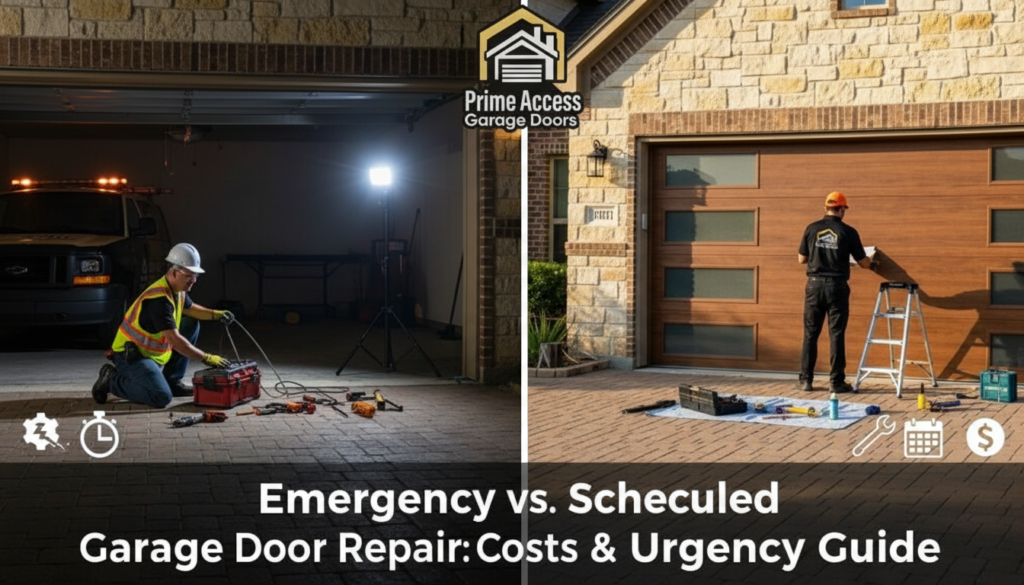
Emergency garage door repair is a specialized, 24/7 intervention designed to address immediate safety risks or total system immobilization. This service is triggered when a door is stuck halfway, has snapped cables, or possesses a broken torsion spring that prevents any manual or motorized movement. Technicians prioritize these calls because an inoperable door often compromises the primary security entry point of a residence. Unlike standard calls, emergency responders arrive equipped for immediate part replacement to restore basic functionality and site safety. You are paying for rapid deployment and the restoration of home security under urgent circumstances.
Immediate Safety Stabilization
The primary goal of an emergency visit is to eliminate any immediate physical threats to the residents. Technicians focus on securing loose components and ensuring the door cannot fall unexpectedly. This prevents injuries caused by heavy panels or high-tension springs that have reached a critical point of failure. Safety stabilization is the foundation of any urgent garage door intervention.
Rapid Security Restoration
A garage door that won’t close leaves your home and belongings exposed to the outside world. Emergency services prioritize closing and locking the door to restore the perimeter of your property. This is especially vital at night or when the homeowner is unable to stay on-site to guard the opening. Security restoration provides peace of mind that your home is once again a hardened target.
24/7 Technical Availability
Emergency repair companies maintain staff around the clock to handle failures that occur outside of traditional business hours. This means you can get professional help at 3:00 AM or on a major holiday when standard shops are closed. While this availability comes at a premium, it ensures that homeowners are never left stranded with a broken door. Having access to an expert at any hour is the hallmark of emergency service.
What Is Scheduled Garage Repair Service?
Scheduled garage repair service is a proactive approach to maintenance and non-critical part replacement conducted during standard business hours. These appointments are ideal for addressing noisy operation, worn rollers, or sensor misalignments that do not currently prevent the door from closing. By booking in advance, homeowners can vet different service providers and compare quotes without the pressure of an active security breach. This service typically includes a comprehensive “tune-up,” where hinges are lubricated and the opener’s force settings are calibrated. It is the most cost-effective method for extending the lifecycle of your garage door hardware.
Comprehensive System Inspection
Scheduled visits allow the technician enough time to perform a multi-point inspection of the entire door assembly. They look for subtle signs of wear in the bearings, pulleys, and motor gears that might be missed during a rush call. This thoroughness ensures that small issues are identified before they escalate into expensive emergencies. A complete inspection is the best defense against unexpected mechanical failures.
Preventative Parts Replacement
During a scheduled service, parts are replaced based on their cycle life and visible condition rather than total failure. Replacing a frayed cable or a rusted hinge during a routine visit is significantly cheaper than calling for help once they snap. This proactive strategy allows the homeowner to manage their repair budget on their own terms. Preventative care is the key to maintaining a smooth and quiet garage door system.
Optimized Operational Performance
Standard service calls focus on more than just “fixing” a problem; they focus on optimizing the door’s performance. Technicians balance the door, adjust the limit switches, and ensure the weather stripping is creating a proper seal. This optimization reduces the workload on the garage door opener, potentially adding years to its lifespan. A well-tuned door operates with minimal friction and maximum efficiency.
How much does an emergency garage door repair cost?
The cost of emergency garage door repair typically carries a premium surcharge ranging from $100 to $200 over standard labor rates. On average, homeowners can expect to pay between $250 and $600 depending on the severity of the component failure and the time of the call. Late-night, weekend, or holiday dispatches represent the highest tier of pricing due to specialized technician availability. This fee covers the “service call” or “trip charge,” which is billed separately from the actual parts like springs, drums, or cables. Understanding these price points is essential to avoid sticker shock when the final invoice is presented.
Dispatch and Trip Charges
Emergency calls almost always involve a flat dispatch fee that covers the cost of sending a technician to your home immediately. This fee is usually higher than a standard service call because it accounts for the disruption of the technician’s planned route. In many cases, this fee is required just to get a van in your driveway after hours. It is the baseline cost for the convenience of immediate, on-site professional assistance.
After-Hours Labor Premiums
Labor rates for emergency work are often billed at “time-and-a-half” or even double the standard hourly rate. This premium compensates the staff for working during evenings, weekends, or statutory holidays. Because these repairs are often performed in less-than-ideal lighting or weather, the labor reflects the difficulty of the task. Homeowners should always ask for the hourly rate before the technician begins the physical work.
Urgent Part Sourcing Costs
If a technician needs to source a specific part that isn’t on their truck during an emergency, additional fees may apply. While most common parts are stocked, specialized high-cycle springs or specific motor boards might require a special trip to a warehouse. This can add to the final invoice in the form of “hot-shot” delivery fees or extra travel time. Knowing the total cost of parts versus labor is vital for financial transparency.
Key Differences Between Emergency & Scheduled Garage Door Repair
Identifying the differences between these two service models helps you manage your household maintenance budget effectively. Emergency repairs are reactive and focused on immediate problem-solving, whereas scheduled repairs are proactive and holistic. The primary variables involve response time, the depth of the repair, and the overall transparency of the pricing structure. Most homeowners will require both types of service at different points in their homeownership journey. Choosing the right one at the right time ensures you aren’t overpaying for urgency that isn’t actually required.
Time-to-Site Metrics
The most obvious difference is how quickly a technician arrives at your property to begin the work. Emergency calls aim for a response within a few hours, whereas scheduled calls may take several days for an opening. If your door is functional but noisy, the wait for a scheduled call is worth the financial savings. However, a blocked driveway usually demands the rapid response of an emergency technician.
Tool and Part Readiness
Emergency trucks are rolling workshops designed to fix the most common 90% of garage door failures on the spot. Scheduled repairs allow the office to pre-screen the problem and ensure the tech brings the specific brand-name parts you requested. While both aim for a single-visit fix, the scheduled approach is more tailored to your specific hardware. Readiness is a matter of generic versatility versus specific, pre-planned accuracy.
Warranty and Long-Term Guarantees
Scheduled repairs often come with more robust labor warranties because they involve a full system check. Emergency “patch jobs” might only guarantee the specific part that was replaced to get the door moving again. When you have a scheduled service, the company is more likely to stand behind the overall performance of the door. Always check the fine print on your invoice to see how long the labor is covered.
When Should You Call Emergency vs Scheduled Garage Door Repair
Deciding when to pull the trigger on an emergency call depends on the level of risk to your property and your schedule. If the door is stuck in a way that creates a safety hazard or leaves your home open to the elements, do not wait. For minor issues like a cracked weather seal or a lightbulb failure in the opener, a scheduled call is sufficient. The goal is to balance the high cost of urgency against the potential risks of delaying the repair. Evaluating the situation logically can save you hundreds of dollars in unnecessary service premiums.
Trapped Vehicle Emergencies
A car stuck inside the garage during a workday is one of the most common reasons for an emergency call. If the torsion spring is broken, the door is often too heavy for a single person to lift safely without assistance. In this case, the emergency fee is the cost of regaining your mobility and meeting your professional obligations. Never attempt to force a door open with a broken spring as it can damage the motor.
Exposed Property Risks
If your garage door is stuck in the fully open position, your entire home’s interior could be accessible to intruders. This is a non-negotiable emergency that requires immediate intervention regardless of the time of day. You cannot leave the property unattended, making the speed of an emergency technician a necessity. Closing the “fourth wall” of your home is a primary safety requirement that justifies the cost.
Minor Mechanical Noise
Squeaking, grinding, or popping sounds are early warning signs that should be addressed via a scheduled appointment. These noises indicate that parts are wearing out but have not yet reached the point of catastrophic failure. By booking a standard service, you can have the technician lubricate the tracks and replace worn rollers at a lower cost. Ignoring these sounds will eventually turn a scheduled task into an expensive emergency.
The Financial Difference Between Emergency Repair vs Scheduled Garage Door
The financial gap between these two services is driven by the logic of supply and demand for immediate labor. When you call for an emergency, you are paying for the technician’s readiness and the company’s ability to pivot their operations for you. Scheduled repairs are more profitable for the company in terms of efficiency, which is why they offer lower rates to the consumer. Over the life of a garage door, a homeowner who utilizes scheduled maintenance will spend significantly less than one who only calls during a crisis. Understanding these financial levers helps you make a better long-term decision for your property.
Service Fee Comparisons
A standard service fee for a scheduled visit usually ranges from $75 to $125, often applied toward the cost of the repair. Emergency service fees are almost always separate and can start at $150 just for the technician to show up. This initial price gap is the first thing you must consider when evaluating the urgency of your repair. If the repair can wait 24 hours, you essentially “earn” that fee back by waiting.
Comparative Labor Inflation
Labor rates are the most volatile part of the invoice when comparing emergency and scheduled services. Because emergency work often happens under pressure or in poor conditions, the hourly rate is significantly higher. Scheduled labor is billed at a steady, predictable rate that allows for better household budgeting. Always ask for a written estimate before any work begins to ensure the labor rates are clearly defined.
Long-Term ROI on Maintenance
Scheduled maintenance offers a high return on investment by preventing the “domino effect” of part failures. For example, replacing a $50 set of rollers during a scheduled visit can prevent a $500 emergency track realignment later. The financial winner is always the homeowner who views their garage door as a machine that requires regular, low-cost attention. Emergency repairs are a necessary evil, but they should not be your primary maintenance strategy.
Conclusion
Choosing between emergency and scheduled garage door repair in TX ultimately depends on your immediate safety and security needs. While a malfunctioning door is always an inconvenience, true emergencies involve trapped vehicles or exposed home entries that cannot wait for a standard business appointment. By accurately assessing the level of risk to your property, you can avoid unnecessary surcharges while ensuring your home remains a hardened target against potential intruders.
Long-term financial health for your home’s entry systems relies on proactive maintenance rather than reactive crisis management. Investing in scheduled “tune-ups” allows for a comprehensive system audit that catches minor hardware fatigue before it results in a total mechanical collapse. Prioritizing these routine inspections ensures operational longevity and provides the best return on investment for your garage door hardware. By staying ahead of wear and tear, you minimize the likelihood of ever needing to pay for high-cost emergency dispatches.
FAQS
Is a broken garage door an emergency?
A broken garage door is considered an emergency if it creates a safety hazard, such as being stuck halfway, or if it leaves your home’s primary entry point completely unsecured. It also qualifies as an emergency if your vehicle is trapped inside and you cannot manually override the system to meet critical obligations.
How much does an emergency garage door repair cost?
Emergency garage door repairs typically cost between $250 and $600, which includes a premium dispatch fee ranging from $100 to $200. This higher price point accounts for immediate response times and labor performed outside of standard business hours or on holidays.
How to open a garage door in an emergency?
To open the door manually, you must pull the red emergency release cord to disconnect the door carriage from the opener’s rail. Once disconnected, you should lift the door straight up by hand, ensuring you have help if the springs are broken and the door is heavy.
What is the most common garage door repair?
The most frequent repair is the replacement of broken torsion or extension springs, which typically snap after reaching their 10,000-cycle limit. Other common issues include misaligned photo-eye sensors and worn-out rollers that cause the door to grind or shake during operation.
How can I tell if my garage door springs are about to break?
You can identify failing springs by listening for loud popping sounds during operation or noticing if the door appears heavy and struggles to lift smoothly. Additionally, gaps in the coils or visible rust on the metal are clear indicators that the spring’s structural integrity is compromised and a snap is imminent.
