
A professional garage door repair service is a technical necessity that ensures the structural integrity and operational safety of your home’s largest moving object. Most homeowners overlook the complex mechanics of their door until a total failure occurs, resulting in trapped vehicles or serious safety risks. A comprehensive service involves a systematic evaluation of high-tension components and electronic systems to prevent premature wear. By addressing minor misalignments early, a technician extends the lifespan of the motor and hardware while maintaining reliable daily performance.
Engaging a garage door technician for routine maintenance is the most effective way to avoid the high costs of emergency part replacements. During a standard call-out, every component—from the lifting cables to the safety sensors—is scrutinized for signs of fatigue, corrosion, or mechanical strain. This process is not merely a visual check but a hands-on calibration designed to optimize the smooth door movement of the entire system. Understanding the specific steps involved in a professional service helps homeowners identify safety risks before they escalate into dangerous malfunctions.
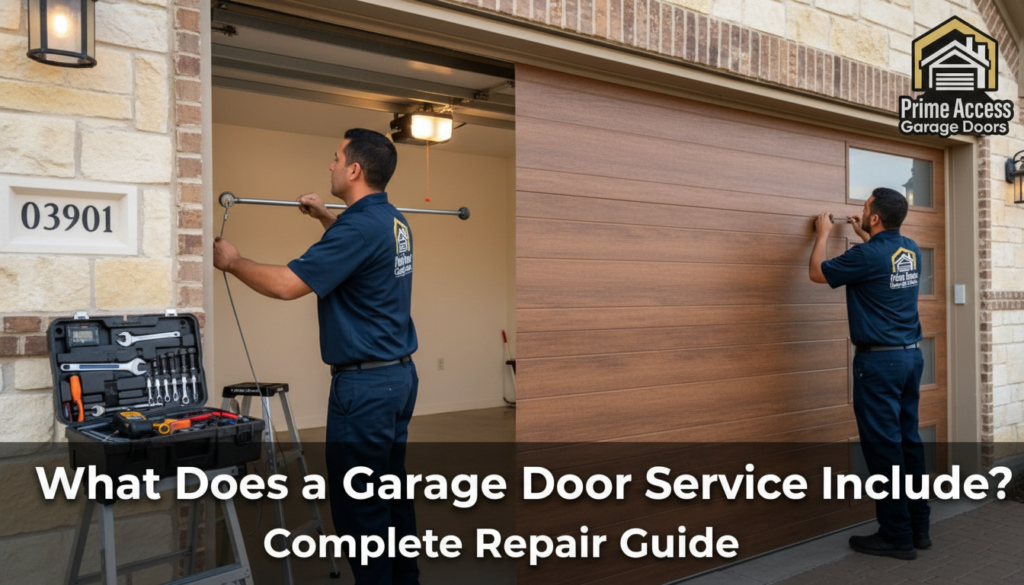
Initial Inspection and Safety Check
A full safety check begins with a comprehensive visual assessment of the door panels, tracks, and mounting hardware to identify any visible damage or structural shifts. The technician operates the door manually and automatically to observe the current performance and listen for grinding or scraping sounds. Every bolt and hinge is inspected for tightness, as constant vibration can lead to loose connections that threaten the door’s stability. Identifying these issues early allows the professional to pinpoint exactly which metal components require immediate attention or replacement.
Professional Visual Assessment
The technician examines the tracks and rollers for any debris, rust, or physical bending that could obstruct the door’s path. They verify that the track alignment is perfectly vertical and horizontal to prevent the door from jamming during operation. Any signs of fraying on the lifting cables are documented immediately to prioritize safety during the subsequent repair steps. This thorough baseline check ensures no underlying mechanical faults are missed before deeper adjustments begin.
Electronic System Testing
The automatic opener service includes a rigorous test of the motor’s force settings and the travel limits of the door. Technicians clean and realign the safety sensors to ensure the infrared beam remains uninterrupted by dust or vibration. They specifically test the safety reverse function by placing an object in the path to confirm the door reacts instantly. Proper calibration of these electronic parts is essential for protecting vehicles, pets, and family members from accidental impact.
Testing and Balancing the Springs
Testing and balancing the springs is a critical phase of the service because these components handle the extreme weight of the door. A door that is out of balance puts immense strain on the motor, leading to a burnt-out opener and broken internal gears. The technician disconnects the opener and lifts the door halfway to see if it holds its position or slides down. If the door falls or feels incredibly heavy, it is a clear indication that the spring tension is incorrect and needs professional calibration.
Torsion Spring Calibration
The technician uses specialized tools to adjust the tension of the torsion springs located above the door header. Precise adjustments are made to ensure the door remains neutral, meaning it can stay open at any height without assistance. Incorrect tension can lead to the springs snapping unexpectedly, which is why this task requires a professional garage door inspection. Properly calibrated springs allow the door to operate with minimal effort, significantly extending the system’s overall life.
Identifying Fatigue and Wear
During the inspection, the technician looks for “gaps” in the spring coils, which indicate that the metal has reached its elastic limit. They check for heavy corrosion and rust, which can make the steel brittle and prone to sudden, violent breakage. If the springs show signs of excessive wear, the technician will recommend an immediate replacement to prevent a total system shutdown. Proactive spring maintenance is the best way to ensure consistent, smooth door movement every single day.
Weight Distribution Analysis
The technician ensures that the weight is distributed evenly across the entire width of the garage door system. If one side of the door is lifting faster than the other, it indicates an imbalance that will eventually warp the tracks. By balancing the springs, the professional ensures that the door stays level and reduces the physical load on the rollers. This step is vital for noise reduction and preventing long-term damage to the door’s structural panels.
Cable Tension Adjustments
The lifting cables work in tandem with the springs to facilitate the heavy lifting required for every opening and closing cycle. Over months of use, these cables can stretch, slip off the drums, or become uneven, which directly leads to a crooked or jammed door. During the service, the technician inspects the tension on both sides to ensure a perfectly synchronized pull. Correcting cable tension is a high-precision task that ensures the safety sensors and motor are not working against an imbalanced load.
Cable Integrity Inspection
Each cable is inspected along its entire length for individual wire breaks, kinks, or signs of severe oxidation. Even a small amount of fraying is treated as a major safety risk, as a snapped cable can cause the door to crash down. The technician checks the connection points at the bottom brackets to ensure the pins are secure and not worn down. If any weakness is detected, the technician will replace the lifting cables immediately to restore the system’s integrity.
Drum and Pulley Alignment
The technician verifies that the cables are seated correctly within the grooves of the drums at the top of the door. If a cable is winding unevenly, it can jump off the drum and leave the door hanging at a dangerous angle. The pulleys are also inspected for worn bearings that could cause the cable to drag or snag during movement. Proper alignment here is the secret to a quiet garage door and a reliable automatic opener service.
Leveling the Door Bottom
Adjusting the cable tension is the primary method used to ensure the bottom of the door sits perfectly flush with the floor. An uneven door creates gaps that allow weather, pests, and debris to enter the garage, compromising the home’s seal. The technician fine-tunes the cable lengths until the door is level, providing an airtight fit against the weather stripping. This adjustment not only looks better but also prevents the door from “binding” as it reaches the closed position.
Lubricating Moving Parts
Friction is the primary enemy of mechanical longevity, making the lubrication of moving parts a non-negotiable step in any garage door maintenance routine. A technician will apply a high-quality silicone-based lubricant to all metal-on-metal contact points to eliminate grinding and squeaking. Unlike standard oil, which attracts dust and creates a thick sludge, specialized lubricants keep the parts clean and operating smoothly. This process significantly reduces the decibel level of the door, providing much-needed noise reduction for attached garages.
Roller and Track Maintenance
The technician applies lubricant to the bearings inside the rollers to ensure they spin freely without resistance. While the tracks themselves are cleaned of grease and debris, a light coating is applied to the pivot points of the roller stems. This ensures that the rollers can transition through the curved sections of the track without jerking or sticking. Consistent lubrication of these parts prevents the rollers from flat-spotting and keeps the door moving quietly along its path.
Spring and Hinge Protection
A thin layer of silicone-based lubricant is applied to the entire length of the springs to prevent “coil bind” and rust. As springs expand and contract, the friction between the coils can cause premature wear and irritating noises if they are dry. The technician also lubricates every hinge point across the door panels to ensure they flex easily during the opening cycle. This protection against corrosion and rust is especially vital for homes in coastal or humid environments.
Motor and Opener Inspection
A comprehensive automatic opener service is the heart of any professional maintenance routine, ensuring the electronic brain of the system functions without error. The technician examines the drive gear and internal motor components to identify signs of plastic shavings or excessive heat buildup. They verify the travel limits to ensure the door opens fully and closes with the correct amount of force against the floor. Testing the safety reverse function is a mandatory part of this phase to guarantee the door retracts instantly if it encounters an obstruction.
Logic Board and Wiring Assessment
The technician inspects the internal circuitry and wiring connections to ensure there are no loose terminals caused by motor vibration. They check the backup battery health and ensure the remote controls communicate effectively with the receiver without signal interference. Any frayed wires or scorched components are replaced immediately to prevent electrical shorts or total motor failure. This detailed electrical review ensures the opener responds reliably to every command from your wall switch or handheld remote.
Drive Train Lubrication
Depending on whether you have a chain, belt, or screw drive, the technician applies the appropriate lubricant to the main rail. For chain-drive systems, a specialized lithium grease is used to prevent metal-on-metal grinding and ensure a smooth, steady pull. Belt drives are inspected for cracks or tension issues, as a slipping belt can cause the motor to cycle without moving the door. Maintaining a clean and lubricated drive train reduces the workload on the motor and significantly extends its operational lifespan.
Safety Sensor Alignment
The infrared safety sensors located at the base of the tracks are cleaned and realigned to ensure a perfect “handshake” between the units. Even a slight misalignment caused by a bump from a lawnmower or trash can can prevent the door from closing. The technician secures the mounting brackets to ensure the sensors stay in place despite the constant vibration of the door. Properly aligned sensors are the primary defense against property damage and personal injury in the garage.
Tightening Bolts, Hinges, and Brackets
With the hundreds of cycles a garage door performs each year, the constant vibration naturally causes structural hardware to loosen over time. A technician systematically goes through every connection point, from the bottom brackets to the top fixtures, to ensure total stability. They pay close attention to the hinges that connect the door panels, as loose hinges can cause the sections to sag or bind. Tightening these metal components prevents the door from rattling and ensures that the weight is distributed exactly as the manufacturer intended. Keeping the hardware secure is a simple but effective way to maintain smooth door movement and prevent parts from bending.
Roller and Track Maintenance
The tracks act as the guide rails for your door, and any misalignment or debris can lead to a catastrophic “off-track” event. During this stage of the service, the technician cleans the tracks of old grease, dust, and grime that can act as an abrasive against the rollers. They inspect the vertical and horizontal tracks with a level to ensure they are perfectly plumb, preventing the door from binding as it moves. If the rollers are made of plastic and show signs of flat-spotting, the technician will often recommend an upgrade to nylon rollers with ball bearings. This maintenance step is essential for noise reduction and ensures the door glides effortlessly through its entire range of motion.
Why Garage Door Servicing Matters
Regular servicing is the only way to identify safety risks that are invisible to the untrained eye, such as hairline fractures in a torsion spring. Beyond safety, consistent maintenance protects your financial investment by preventing a small, cheap-to-fix issue from spiraling into an expensive motor replacement. A well-serviced door operates with much higher efficiency, putting less stress on every individual part and increasing the overall longevity of the system. It also ensures that your home remains secure, as a door that doesn’t close flush is a primary entry point for intruders and pests.
When to Book a Garage Door Service
Homeowners should ideally book a professional garage door inspection at least once a year to stay ahead of natural wear and tear. However, you should call a technician immediately if the door begins to move unevenly, makes unusual grinding noises, or feels heavy during manual operation. If the automatic opener struggles to lift the door or stops halfway, these are clear warning signs of spring fatigue or cable tension issues. Ignoring these symptoms often leads to a complete mechanical failure, usually at the most inconvenient time possible. Proactive scheduling is far more cost-effective than paying for emergency repairs after the door has already broken down.
Warranty Check and Compliance Review
A professional warranty check ensures that your maintenance history aligns with the strict requirements set by manufacturers to keep your coverage active. Most high-end garage door brands mandate annual servicing by a qualified garage door technician to honor claims on major parts like torsion springs or motor logic boards. During this review, the technician documents all adjustments and part replacements to provide you with a verifiable service log for future insurance or warranty inquiries. Failing to maintain this paper trail can result in the voiding of long-term guarantees, leaving you responsible for the full cost of expensive mechanical failures.
Conclusion
Maintaining your garage door through professional service is a proactive strategy that preserves both home security and mechanical reliability. By addressing high-tension components like springs and cables before they fail, you eliminate the risk of sudden structural collapse or motor burnout. This investment in routine care ultimately ensures that your garage door remains a safe, quiet, and efficient asset for years to come.
A consistent service schedule provides the documented proof required to keep manufacturer warranties valid and your property in full compliance with safety codes. Relying on a qualified technician allows you to catch invisible defects, such as metal fatigue or sensor misalignment, that could otherwise lead to costly emergency repairs. Prioritizing these technical inspections is the most effective way to guarantee the long-term performance and safety of your automated entry system.
Frequently Asked Questions
Can I use standard WD-40 to lubricate my garage door tracks?
Standard WD-40 is a degreaser rather than a long-term lubricant and will actually attract dust and grit that clogs the rollers. You must use a specialized silicone-based lubricant or lithium grease to ensure smooth door movement without creating a sticky residue.
How do I know if my garage door is properly balanced? Disconnect the automatic opener and lift the door halfway by hand; it should stay in place without sliding up or crashing down. If the door falls, your spring tension is likely too weak and requires immediate adjustment by a professional garage door technician.
Why does my garage door close partway and then immediately reverse?
This is usually a sign that your safety sensors are misaligned or obstructed by debris, triggering the safety reverse function. A technician will check the sensor alignment and wiring to ensure the infrared beam is uninterrupted during the closing cycle.
What causes the loud popping or banging sound when my door opens?
Loud popping usually indicates that the torsion springs are binding or that a lifting cable is slipping off the drum. These sounds are serious warning signs of mechanical strain and should be inspected immediately to prevent a complete cable or spring failure.
Does a garage door service include the programmed remote controls?
Yes, a full automatic opener service involves testing the signal strength and battery health of all remotes and wall stations. The technician ensures the rolling code technology is synced correctly to prevent unauthorized access and ensure a consistent response.
