
When your automatic opener fails, knowing How To Use the Garage Door Emergency Release can quickly restore access and prevent unnecessary damage. This built-in safety feature allows homeowners to switch from automatic to garage door manual operation during a garage door won’t open power outage, opener malfunction, or other automatic garage door failure situations. Used correctly, the garage door emergency release provides reliable garage door emergency access and acts as an essential garage door functional backup.
Many homeowners in Lewisville, Texas only notice the red cord when their garage door opener not working becomes urgent. This professional guide explains the safe garage door emergency disconnect procedure, proper troubleshooting steps, and how to restore normal operation with confidence.
Understanding the Garage Door Emergency Release
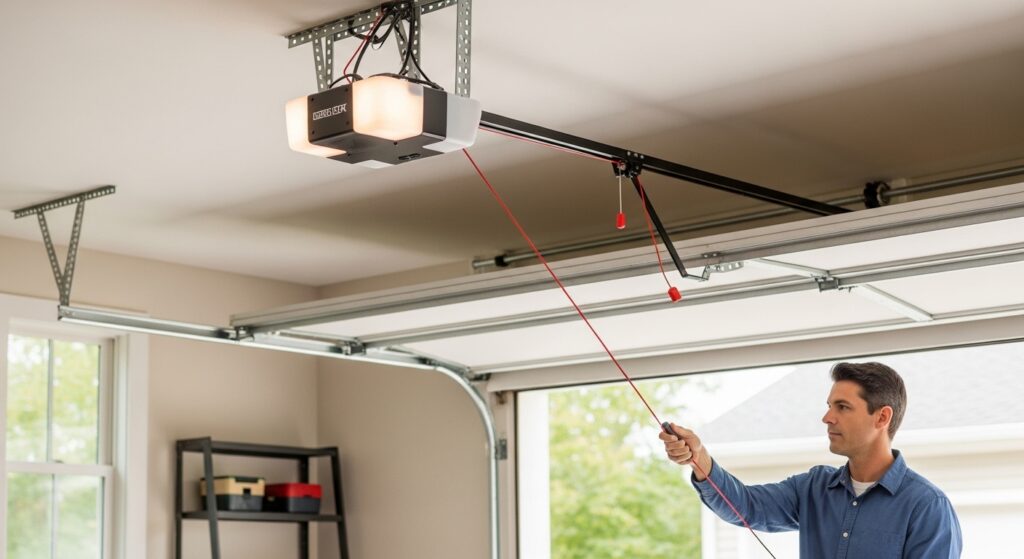
The garage door opener emergency release is a critical garage door safety feature designed to provide manual control when the opener system fails. Most modern garage door opener system units include a visible garage door red emergency cord connected to the trolley carriage on the opener rail. Pulling this emergency release cord activates the manual disconnect, separating the drive carriage from the opener motor unit so the door can move freely.
This manual override supports safe overhead door manual control and ensures homeowners maintain access during power outage operation. Without it, a garage door stuck closed could leave vehicles trapped inside.
When Should You Use Emergency Release
Understanding when should you use emergency release prevents unnecessary wear on your system. The feature is intended for specific situations where automatic operation is unavailable or unsafe.
During a garage door won’t open power outage or confirmed opener failure
When performing maintenance, repairs, or a professional garage door inspection
Outside of these situations, frequent use may signal deeper garage door reliability improvement needs or developing garage door emergency release problems.
How To Use the Garage Door Emergency Release (Step-by-Step)
Learning how to use garage door emergency release from inside is straightforward when performed carefully. Follow these professional garage door emergency release steps to protect the torsion spring system, extension spring system, and overall garage door counterbalance.
Step 1: Confirm the Door Is Fully Closed
Before pulling the release handle, ensure the door is completely shut. This protects the door weight support system and prevents sudden movement within the door lifting mechanism. If the door is open and poorly balanced, the garage door balance could shift unexpectedly once the opener disengages.
Step 2: Locate the Emergency Pull Cord
Find the hanging emergency pull cord attached to the garage door opener rail system. This bright red garage door emergency handle connects to the garage door release lever. Many homeowners ask, what does garage door red cord do—it simply disconnects the opener so the door can move manually.
Step 3: Pull the Cord Safely
Firmly pull straight down to disengage garage door opener components. You should feel the garage door opener carriage release separate at the opener engagement point. The opener is now garage door opener disengaged, enabling garage door hand operation.
Step 4: Lift the Door Manually
Use steady force to perform a garage door manual lift. The door should move smoothly within the garage door track system if the garage door balance and springs are healthy. Difficulty here often indicates the garage door won’t open manually due to spring or counterbalance issues.
Step 5: Secure the Door
Once positioned, ensure the door remains stable. This completes safe garage door manual mode use and provides temporary access until power or repairs are restored.
How To Reconnect the Garage Door Opener
After resolving the issue, you must reconnect garage door opener components to restore automatic function. Many homeowners struggle with how to reengage garage door opener carriage, but the process is usually simple.
| Situation | Action Required | Result |
| Opener disengaged | Pull cord toward opener or run opener cycle | Carriage reconnects |
| Door won’t reengage | Check garage door opener trolley position | Alignment restored |
| Opener runs but door stays still | Perform garage door opener reconnect procedure | Automatic control returns |
| System still failing | Schedule garage door service Lewisville TX | Full garage door system recovery |
Following proper garage door opener reset steps ensures the opener exits manual mode and resumes reliable performance.
Troubleshooting Common Emergency Release Issues
Even when you understand How To Use the Garage Door Emergency Release, problems can occur. Effective garage door emergency release troubleshooting helps identify whether the issue is mechanical or electrical.
If the garage door emergency release stuck, tension on the drive carriage is often the cause. Slightly moving the door may relieve pressure on the trolley carriage. If the garage door opener won’t reconnect, inspect the opener rail, opener motor unit, and carriage alignment. Persistent problems usually indicate the need for residential garage door repair.
When the garage door won’t open manually, the most common culprit is a failed spring or compromised garage door counterbalance. This creates serious garage door operational safety concerns and should be handled professionally.
Safety Tips for Homeowners
Proper garage door emergency release safety tips protect both people and equipment. The emergency mechanism is reliable, but misuse can create hazards.
Always avoid pulling the emergency release cord while the door is moving. Sudden garage door system imbalance can damage hardware or cause injury. Verify smooth movement inside the garage door track system, and confirm the safety mechanism is functioning correctly. Homeowners focused on garage door homeowner safety should include periodic checks in their garage door emergency preparedness tips routine.
Routine lubrication and inspection also support long-term garage door reliability improvement and reduce unexpected failures.
Professional Help in Lewisville, TX
While many homeowners can manage basic garage door manual operation, some situations require expert care. If your system shows repeated automatic garage door failure, unusual noises, or spring tension problems, it’s time to schedule garage door repair Lewisville TX or garage door service Lewisville TX.
Professional technicians provide:
- Complete garage door troubleshooting guide evaluation and safety check
- Fast emergency garage door repair to restore safe operation
Local experts in Lewisville, Texas can quickly diagnose issues and ensure your system meets modern garage door safety procedure standards.
Preventive Maintenance to Reduce Emergency Situations
The best way to avoid emergency situations is proactive care. Regular garage door emergency release maintenance, lubrication, and balance testing help keep the garage door opener system functioning properly. Monitoring the garage door opener rail system, springs, and hardware prevents sudden failures and supports consistent garage door power failure solution readiness.
Homeowners who follow a structured garage door troubleshooting guide and schedule periodic professional garage door inspection enjoy fewer breakdowns and improved system lifespan. Preventive care is the foundation of reliable garage door emergency preparedness.
Final Thoughts
In the end, dealing with Garage door opener flashing lights doesn’t have to be stressful. Most issues — from sensor misalignment to remote problems — can be diagnosed quickly with proper garage door opener troubleshooting. By understanding why your garage door opener blinking occurs, you can often restore safe operation without expensive repairs.
However, if your garage door opener not working persists after basic fixes, it’s wise to call a professional. Prompt attention keeps your system reliable, protects your home’s security, and prevents small problems from turning into costly failures. Regular maintenance and timely repairs are the smartest way to keep your garage door running smoothly year-round.
FAQs
How do I use the garage door emergency release?
To use the garage door manual release, ensure the door is closed, pull the emergency release cord, and lift the door manually. This activates the manual override and allows temporary operation during opener failure.
When should I pull the garage door emergency cord?
Use it during a garage door won’t open power outage, opener malfunction, or when performing maintenance. Avoid using it during normal daily operation.
Why won’t my garage door open after pulling the release?
If the garage door won’t open manually, the issue is often spring failure, poor garage door balance, or track obstruction requiring residential garage door repair.
How do I reconnect my garage door opener after manual release?
Run the opener or manually move the trolley to the opener engagement point to complete the garage door opener reconnect procedure.
Is it safe to use the garage door emergency release?
Yes—when used correctly. Follow proper garage door safety procedure guidelines and never pull the cord while the door is moving.
Can I open my garage door during a power outage?
Yes. The garage door emergency release provides reliable garage door backup access and enables full garage door hand operation until power returns.
Why is my garage door emergency release stuck?
Tension on the trolley carriage or misalignment in the rail often causes sticking. Professional service may be required if the problem continues.
