
A garage door reverses before closing is one of the most frustrating homeowner problems. One moment your door begins to shut normally, and the next it suddenly changes direction and opens again. While this behavior is often a built-in safety response, repeated reversing usually signals underlying garage door closing issues that need attention.
Understanding why your garage door reverses can help you avoid bigger repair bills, prevent safety risks, and restore smooth operation. In many Lewisville, TX homes, this issue stems from sensor misalignment, force setting errors, or wear within the garage door system. This guide explains the real causes, how to troubleshoot safely, and when to call a professional garage door repair service.
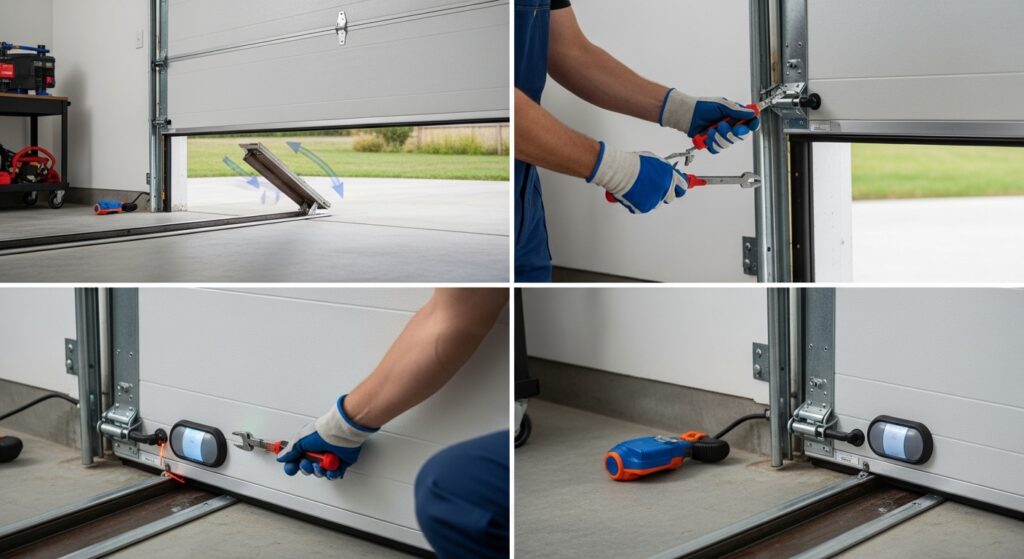
Understanding the Garage Door Safety Reverse System
Modern garage doors are designed with a garage door safety reverse mechanism to prevent injuries and property damage. This feature is part of the broader automatic garage system and relies heavily on photo eye sensors, force settings, and the garage door opener motor working together.
When the system detects resistance, obstruction, or abnormal movement, the safety reversal system automatically stops the door and sends it back up. While this is essential for safety, it can also create confusion when the garage door won’t stay closed even though nothing obvious is in the way.
The overhead door system depends on proper coordination between the garage door mechanism, garage door sensors, and mechanical components like springs, rollers, and tracks. Any imbalance or miscommunication between these parts can trigger unwanted reversing and ongoing garage door functionality issues.
Most Common Reasons Your Garage Door Reverses Before Closing
When a garage door closes then opens, the cause is usually related to sensor interference, mechanical resistance, or incorrect opener settings. In Lewisville homes, dust buildup, seasonal expansion, and normal garage door wear and tear frequently contribute to these problems.
Two of the most common triggers homeowners should check first are:
- Misaligned or obstructed garage door sensors and photo eye sensors
- Mechanical resistance within the garage door tracks, rollers, or springs
If neither of these resolves the issue, deeper garage door malfunction symptoms may be present.
Sensor Problems and Photo Eye Issues
The leading reason a garage door opener reversing occurs is trouble with the photo eye sensors. These small but critical devices sit near the bottom of the track and create an invisible beam across the opening. If that beam is interrupted—even slightly—the system assumes something is in the way and reverses immediately.
Dust, spider webs, sunlight glare, or accidental bumps commonly cause a garage door sensor problem. Many homeowners notice the opener light blinking or the door going down then back up. These are classic signs that the garage door not closing properly is sensor-related.
Routine cleaning and careful garage door sensor alignment often solve the problem. However, damaged wiring or failing sensors may require professional safety sensor wiring repair from a qualified technician in Lewisville.
Limit Settings and Force Adjustment Errors
Incorrect garage door limit settings or garage door force settings are another frequent cause of reversing. These adjustments tell the opener how far the door should travel and how much resistance is acceptable during operation.
If limits are set too short, the opener mistakenly thinks the floor is an obstruction. This creates the classic garage door goes down then back up behavior. Similarly, overly sensitive force settings can trigger a garage door auto reverse problem even when the path is clear.
Professional garage door opener troubleshooting usually includes recalibrating travel limits and performing a precise garage door sensitivity adjustment. Because these settings directly impact safety, improper DIY changes can worsen the problem or create new risks.
Track, Roller, and Alignment Problems
Mechanical friction is another major reason a garage door reverses halfway. The opener continuously monitors strain through the trolley system, opener rail, and drive gear. When resistance increases beyond normal levels, the system activates the safety reverse.
Bent garage door tracks, worn garage door rollers, loose garage door hinges, or debris buildup can all create excess friction. Over time, these conditions lead to garage door performance issues, noisy operation, and unreliable closing.
Poor garage door alignment is especially common in homes where the door has experienced impact damage or long-term settling. Regular inspection and lubrication help prevent these mechanical triggers and improve overall garage door reliability problems.
Spring and Counterbalance Issues
Your torsion spring system or extension spring system is responsible for balancing the door’s weight through the counterbalance system. When spring tension becomes uneven or weak, the opener must work harder, which can trigger the garage door safety feature.
Homeowners may notice the door feels unusually heavy, jerks during movement, or closes unevenly. These are strong indicators of spring-related garage door reliability problems. Because springs are under extreme tension, professional garage door spring repair is strongly recommended rather than attempting DIY fixes.
Ignoring spring issues often leads to worsening garage door system failure, higher repair costs, and potential safety hazards.
Opener Motor, Logic Board, and Electrical Issues
Sometimes the problem originates inside the opener itself. A worn garage door opener motor, failing logic board, or damaged circuit board can misinterpret normal resistance as an obstruction.
Electrical-related symptoms often include repeated garage door opener clicking, humming without movement, or intermittent operation. Smart systems such as a WiFi garage door opener or smart garage door opener may also experience firmware glitches, power interruptions, or remote signal interference.
Checking the opener power supply and battery backup system can rule out simple electrical issues. Persistent problems, however, typically require professional garage door opener repair.
Quick Troubleshooting Steps for Homeowners
Before scheduling a garage door repair near me, homeowners in Lewisville can perform safe preliminary checks. Begin by gently cleaning the photo eye sensors and confirming the indicator lights are steady. Next, inspect the garage door tracks, rollers, and cables for visible debris or damage.
Performing a manual garage door balance test is also helpful. Disconnect the opener and lift the door halfway. If it does not stay in place, the garage door springs or counterbalance system likely need professional attention.
Avoid adjusting torsion springs, opening the motor housing, or forcing the door closed. Many homeowner garage door problems become more expensive due to unsafe DIY attempts.
Repair vs Professional Service: What’s the Best Move?
| Situation | DIY Possible | Professional Recommended |
| Dirty or misaligned sensors | Yes | — |
| Minor track debris | Yes | — |
| Force or limit calibration | Sometimes | Often |
| Spring or cable problems | No | Required |
| Opener motor or logic board failure | No | Required |
| Persistent reversing after basic fixes | No | Required |
For many homes in Lewisville, TX, persistent reversing indicates it is time for professional garage door opener repair or full residential garage door repair.
When to Call a Garage Door Repair Expert in Lewisville, TX
If your garage door won’t stay closed after basic troubleshooting, professional help is the safest option. Local specialists have the diagnostic tools to inspect the entire residential garage system, including the garage door hardware, springs, and opener electronics.
Homeowners should consider emergency garage door repair Lewisville if the door reverses every cycle, the opener struggles or overheats, cables appear frayed, or the door is off track. A trusted garage door company Lewisville can provide a full garage door safety inspection, accurate garage door service estimate, and long-term solution.
Preventing Future Garage Door Reversal Problems
Preventive care dramatically reduces unexpected garage door malfunction symptoms. Routine maintenance keeps overhead garage door repair costs lower and extends the life of the entire garage door system.
Scheduling annual garage door preventive maintenance is highly recommended. A proper service visit includes checking the garage door balance, lubricating moving parts, testing the safety reversal system, and verifying proper garage door alignment. Consistent care improves performance, reduces noise, and helps homeowners avoid sudden breakdowns.
Cost Expectations for Garage Door Reversal Repairs
The garage door repair cost for reversing issues varies depending on the root cause. Simple sensor alignment is usually inexpensive, while opener or spring work increases the average garage door repair price.
Key pricing factors include the condition of sensors, opener diagnostics, spring health, labor complexity, and whether emergency garage door repair is required. Requesting a detailed garage door repair pricing quote from a local provider ensures transparency and helps homeowners plan effectively.
Final Thoughts
If your garage door reverses before closing, don’t ignore the warning signs. What starts as a small sensor misalignment or minor mechanical resistance can quickly develop into major garage door system failure. Prompt troubleshooting, regular maintenance, and timely professional service are the best ways to protect your home’s safety and convenience. For homeowners in Lewisville, TX, addressing the issue early ensures smoother operation, lower long-term costs, and dependable garage door performance year-round.
FAQs
What causes a garage door to reverse before closing?
The most common causes include misaligned garage door sensors, incorrect garage door force settings, track resistance, or problems within the garage door opener motor. The system reverses as a built-in safety response when it detects obstruction or abnormal resistance.
Can I fix a garage door that keeps going back up myself?
You can safely clean sensors, remove minor track debris, and check alignment. However, issues involving springs, cables, or opener electronics should be handled by a professional garage door repair service to avoid injury and further damage.
How do I know if my garage door sensors are bad?
Common signs include blinking opener lights, intermittent closing, or the garage door closes then opens immediately. A proper garage door sensor troubleshooting check or professional inspection can confirm the issue.
Is a reversing garage door dangerous?
Yes. While the garage door safety reverse protects against accidents, repeated malfunction indicates deeper garage door safety concerns that should be addressed quickly.
When should I call a garage door repair service in Lewisville, TX?
Call a professional if basic troubleshooting fails, the door is unbalanced, springs appear worn, or the opener shows electrical symptoms. A qualified local garage door technician can perform full diagnostics and restore safe operation.
