
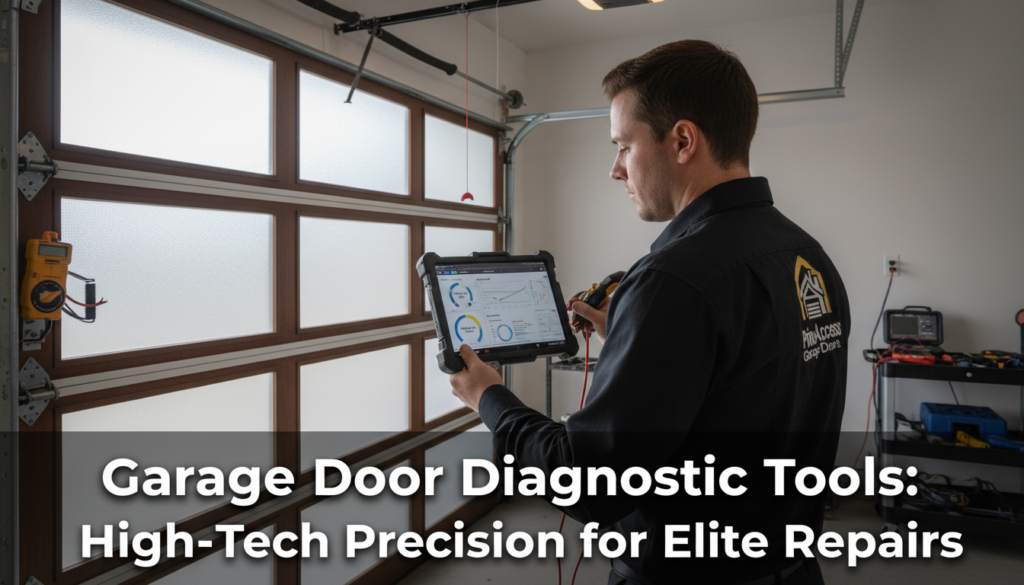
Modern garage door repair has shifted from guesswork to a data-driven science where digital diagnostics play a pivotal role in system restoration. Professional technicians now leverage remote monitoring and real-time performance data to identify hidden mechanical stressors before they lead to total system failure. By integrating tech-driven servicing, experts can pinpoint exact torque requirements and track alignment through virtual overlay diagnostics that ensure every component meets safety standards. This high-level approach transforms a standard service call into a precision repair session that maximizes the long-term health of the entire opening mechanism.
The evolution of smart garage door systems necessitates a sophisticated toolkit capable of managing both heavy hardware and delicate home automation integration. Utilizing cloud-based repair tracking allows technicians to maintain a digital history of the door’s performance, ensuring that every adjustment contributes to overall system longevity. When hardware is calibrated using infrared misalignment detection, the risk of premature wear on the motor and tracks is virtually eliminated. This synergy between traditional mechanical skill and high-tech sensor integration defines the modern standard for residential and commercial entry points.
Why the Right Tools Matter in Garage Door Repair
The difference between a temporary fix and a permanent solution lies in the technician’s ability to execute automated maintenance tasks with surgical accuracy. Using specialized tools ensures that the door operates within its designed parameters, preventing the motor from overcompensating for friction or imbalance. Proper instrumentation is the only way to verify predictive maintenance metrics, which are essential for identifying weakened springs or failing cables before they snap. Without the correct gear, attempting to calibrate garage door automation components can result in permanent damage to the logic board or physical injury to the operator. High-quality tools are the bedrock of system longevity, allowing for a seamless transition between manual mechanical repairs and complex home automation integration.
1. Cordless Power Drill
A high-torque cordless drill is the workhorse of any repair job, essential for the rapid installation of brackets and motor units. Technicians use these for precision repair tasks where consistent pressure is required to secure heavy-duty fasteners into wooden or steel frames. Without the mobility of a cordless unit, navigating the tight spaces around the tracks becomes a logistical bottleneck. Modern drills often feature clutch settings that prevent over-tightening, which is critical when mounting sensitive smart garage door systems.
2. Adjustable Wrench Set
Adjustable wrenches provide the versatility needed to handle the diverse nut and bolt sizes found across different brands of garage hardware. They are particularly useful for tightening track bolts and securing the carriage assembly to the drawbar. In the context of tech-driven servicing, having a tool that fits perfectly prevents the rounding of bolt heads, which can complicate future automated maintenance tasks. A technician relies on the leverage of a heavy-duty wrench to ensure the structural frame remains rigid during high-cycle operations.
3. Locking Pliers (Vise Grips)
Locking pliers are indispensable for holding the door in place or securing the torsion shaft during a complex overhaul. By clamping the tracks, a technician can safely perform digital diagnostics on the rollers and hinges without the door moving unexpectedly. These pliers act as an extra set of hands, providing the stability required for precision repair on the vertical and horizontal track alignment. They are a primary safety tool that ensures the door remains stationary while the technician focuses on infrared misalignment detection.
4. Torsion Spring Winding Bars
Torsion springs hold immense energy, and winding bars are the only safe way to adjust the tension required for a balanced door. Using makeshift tools like screwdrivers is a dangerous mistake that ignores the fundamental principles of system longevity.
- Engineered Safety: Designed specifically to fit the winding cone to prevent slips during high-tension adjustments.
- Balance Calibration: Allows for micro-adjustments to ensure the door weight is perfectly offset by the spring’s torque.
- Stress Testing: Essential for setting the initial tension that powers garage door automation cycles.
- Durability: Forged from high-tensile steel to withstand the extreme force required for heavy-duty commercial springs.
5. Tape Measure and Laser Level
Precision is the enemy of friction, and a laser level ensures that tracks are perfectly parallel for smooth operation. Technicians use these tools to confirm infrared misalignment detection results, ensuring the safety sensors are “seeing” each other across the floor.
- Track Alignment: Guarantees the vertical and horizontal tracks are square, preventing roller bind and motor strain.
- Sensor Positioning: Used to mount safety eyes at the exact height required by UL325 safety standards.
- Symmetry Check: Ensures the spring anchor bracket is centered to provide equal lifting force on both sides.
- Installation Accuracy: Critical for smart car synchronization where the door must reach full travel limits every time.
6. Socket Set
A comprehensive socket set allows for the high-speed removal and replacement of hinge bolts and motor mounts. This tool is vital for deep-reach applications where a standard wrench cannot access the nuts securing the power head to the ceiling joists. Efficient use of a socket set speeds up tech-driven servicing, allowing the technician to focus on more complex digital diagnostics. By using the correct socket size, the technician protects the integrity of the hardware, ensuring the door remains serviceable for years.
7. Garage Door Lubricant
Not all grease is created equal; professional-grade silicone or lithium-based lubricants are required for the high-friction environment of a garage door. Proper lubrication is a core component of predictive maintenance, reducing the decibel level of the operation and extending the life of the rollers.
- Friction Reduction: Coats the metal-on-metal contact points to prevent the “grinding” that leads to part failure.
- Weather Shielding: Protects springs and bearings from the humidity and temperature swings common in Texas and Arizona.
- Cycle Efficiency: Ensures the motor uses less amperage to move the door, supporting real-time performance data accuracy.
- Residue Prevention: High-quality sprays do not attract dust and grime, which can gum up high-tech sensor integration.
8. Claw Hammer and Rubber Mallet
While a claw hammer is used for prying and securing wooden framing, a rubber mallet is essential for adjusting metal tracks without denting them. Technicians use the mallet to “nudge” the tracks into alignment during precision repair without compromising the structural finish. This combination of tools allows for both brute force and delicate finesse, depending on the repair stage. Using a mallet ensures that the infrared misalignment detection path isn’t blocked by bent or warped track edges.
9. Safety Gear: Goggles, Gloves & Hard Hat
Safety gear is the non-negotiable barrier between a technician and the high-tension environment of a heavy moving object. Protecting the eyes from flying debris and the hands from sharp metal edges is a prerequisite for any precision repair.
- Impact Protection: Goggles guard against snapping cables or springs, which can release stored energy instantly.
- Grip and Shield: High-dexterity gloves allow for the handling of greasy parts while protecting against “pinch points.”
- Head Safety: Hard hats are vital during commercial door drone inspection or when working beneath a heavy motor unit.
- OSHA Compliance: Ensures the service provider follows legal safety mandates while performing automated maintenance tasks.
10. Multimeter
The multimeter is the ultimate tool for digital diagnostics, allowing the technician to test the electrical integrity of the motor and sensors. It is used to troubleshoot home automation integration issues by verifying that the logic board is receiving the correct voltage.
- Circuit Testing: Identifies breaks in the wiring for high-tech sensor integration before parts are unnecessarily replaced.
- Voltage Verification: Ensures the opener has a stable power supply to support remote monitoring features.
- Capacitor Analysis: Tests the motor’s start capacitor to predict when the unit might fail to lift the door.
- Signal Continuity: Confirms that the wall button and safety eyes are communicating with the smart garage door systems.
Garage Door Repair Technologies Set to Change the Way We Work
The rapid integration of digital diagnostics and IoT-enabled hardware is fundamentally altering the service landscape for modern technicians. We are moving away from reactive fixing toward a model of predictive maintenance, where real-time performance data alerts homeowners to issues before a mechanical failure occurs. By leveraging cloud-based repair tracking, service providers can now maintain a comprehensive digital twin of a door’s service history, ensuring every adjustment is backed by historical metrics.
This shift toward tech-driven servicing not only reduces downtime but also enhances the overall safety and reliability of heavy residential machinery. The adoption of virtual overlay diagnostics allows for a level of precision that was previously impossible, marking a new era of efficiency in the industry.
Smart Garage Door Systems
The transition to smart garage door systems in TX has turned a basic mechanical entry point into a sophisticated node within the broader home automation integration ecosystem. These units utilize high-tech sensor integration to provide users with encrypted access and immediate status updates via mobile platforms. Technicians now prioritize remote monitoring capabilities, allowing them to troubleshoot software glitches or sensor misalignments without an immediate physical site visit.
Precision Repair Through Infrared Detection
Achieving perfect balance and safety now relies heavily on infrared misalignment detection to ensure that safety eyes and tracks are calibrated to sub-millimeter accuracy. This technology eliminates the trial-and-error approach of the past, providing a precision repair that protects the motor from unnecessary strain and gear stripping. By using these advanced beams, technicians can identify structural shifts in the garage frame that are invisible to the naked eye but critical to system longevity.
Commercial Door Drone Inspection
For large-scale industrial facilities, commercial door drone inspection is becoming the gold standard for assessing high-clearance overhead doors and complex track layouts. Drones equipped with thermal imaging can detect friction-induced heat in bearings and rollers, providing digital diagnostics that human inspectors might miss from the ground. This method significantly improves safety by reducing the need for ladders or lifts during the initial assessment phase of a high-tech service call.
Benefits of Technology in Enhancing Garage Door Repair
The primary benefit of modern innovation is the drastic increase in system longevity achieved through consistent, data-backed oversight. When homeowners utilize real-time performance data, they move from expensive emergency repairs to cost-effective, predictive maintenance schedules. This proactive approach ensures that garage door automation components are never pushed beyond their engineered limits, saving thousands in long-term replacement costs. Furthermore, tech-driven servicing provides a layer of transparency, as cloud-based repair tracking gives customers a verifiable record of every component replaced and every tension adjustment made. This high-tech transparency builds trust and guarantees that the mechanical health of the home is never left to guesswork.
- Enhanced Safety: High-tech sensor integration prevents accidents by detecting obstructions with higher sensitivity and faster response times than older analog systems.
- Operational Efficiency: Automated maintenance tasks remind users to lubricate parts or check balances, preventing minor friction from turning into a major motor burnout.
- Remote Accessibility: Remote monitoring allows homeowners to grant access to delivery drivers or guests from anywhere in the world, enhancing both convenience and security.
- Seamless Integration: Smart car synchronization ensures the door opens automatically as the vehicle approaches, creating a frictionless entry experience that fits modern lifestyles.
- Diagnostic Accuracy: Using digital diagnostics allows technicians to identify the exact failing circuit or worn gear, eliminating the “parts-changing” guesswork that inflates repair bills.
- Cost Savings: By identifying wear patterns through real-time performance data, major structural failures are avoided, significantly extending the time between full system overhauls.
The Evolving Role of Tech in Garage Door Services
As the industry matures, the role of a technician is evolving from a pure mechanic to a specialist in home automation integration and digital systems. The modern service professional must be as comfortable with virtual overlay diagnostics as they are with a winding bar, ensuring that the software and hardware work in perfect harmony. This evolution is driven by the demand for smart garage door systems that offer more than just entry, focusing instead on security, energy efficiency, and total connectivity. We are seeing a future where predictive maintenance is the standard, and manual “emergency” calls become a relic of the past. Ultimately, this technological surge ensures that the garage door remains the most reliable and intelligent component of the modern high-tech home.
Conclusion
The integration of smart garage door systems and digital diagnostics has fundamentally redefined the parameters of residential and commercial property maintenance. By prioritizing predictive maintenance and real-time performance data, technicians can now guarantee system longevity that far exceeds the capabilities of traditional mechanical methods. This shift ensures that every precision repair is backed by empirical evidence, creating a safer and more reliable environment for modern homeowners.
As home automation integration continues to advance, the necessity for tech-driven servicing and remote monitoring will become the industry standard rather than a luxury. Future developments in virtual overlay diagnostics and automated maintenance tasks are set to further minimize human error and operational downtime. Ultimately, embracing these high-tech innovations is the only way to maintain the mechanical integrity and security of the most critical entry point in the modern home.
FAQS
What is the most common garage door repair?
The most frequent repair involves broken torsion or extension springs, which typically wear out after roughly 10,000 cycles. When these components fail, the door becomes dangerously heavy and requires precision repair to restore safe mechanical balance.
How to Diagnose a Garage Door
Diagnosis begins with digital diagnostics and visual inspections of the tracks for obstructions or misalignment. Technicians also use real-time performance data from smart openers to identify electrical faults or safety sensor blockages that prevent the door from closing.
How Much Does a Garage Door Tech Make a Year?
As of 2026, the average annual salary for a garage door technician in the United States is approximately $51,310. High-level specialists in major markets like Texas or Arizona can earn upwards of $78,500 by focusing on complex home automation integration and commercial services.
What are common garage door mechanical failures and how are they repaired?
Worn rollers and frayed cables are primary mechanical failures that cause noisy operation or uneven lifting. These are repaired through tech-driven servicing where hardware is replaced and lubricated to ensure system longevity and prevent motor burnout.
How Does Smart Car Synchronization Benefit Homeowners?
Smart car synchronization allows the garage door to detect an approaching vehicle via GPS or Bluetooth, triggering an automatic opening sequence. This integration provides a seamless, hands-free entry while enhancing security through encrypted remote monitoring and arrival alerts.
